

Never Again: Lessons from the Holocaust for Patient Advocates
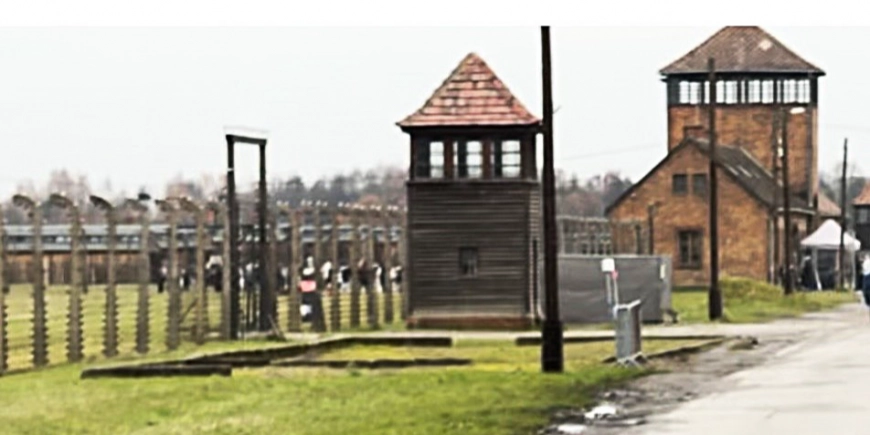
Learning how the Holocaust unfolded helps us recognize warning signs, protect the dignity of others, and embrace our shared responsibility to care for one another and speak out so history’s pain is not repeated
Every day, patient advocates stand at the intersection of trust and vulnerability. But our work is also shaped by history—by moments when human dignity was denied, and the world watched.
As we approach Yom HaShoah, we remember the six million Jews and millions of others who were brutally murdered during the Holocaust. But remembrance is not enough. Reflection and action are essential.
The Holocaust did not begin with violence. It began with words. With labeling. With discrimination. With the gradual normalization of dehumanization.
People were categorized. Marginalized. Ignored. And eventually, they were denied care, denied rights, and denied humanity.
In some of the darkest chapters, medical professionals were complicit in atrocities. Nazi doctors participated in the T4 program, systematically killing approximately 250,000 adults and children with mental and illness as well as physical and development challenges which Hitler, deemed “unworthy” of his vision of a “perfect” Aryan race and nation.
Patient advocacy, at its core, is about preserving dignity—and dignity is the first thing lost when prejudice takes hold. That is why remembrance matters. Not only as reflection—but as responsibility.
In other cases, in Auschwitz, children and young women were subjected to brutal medical experiments, all in the service of a genocidal ideology. These actions show how professional authority, when divorced from ethics, humanity, and the protection of vulnerable individuals, can become a tool of oppression.
Learning about these programs—and the role of medical professionals who violated their ethical duties—helps us recognize warning signs and reinforces our commitment to protect the dignity of every patient we serve.
Some of the individuals we care for may be Holocaust survivors. Others may be children or grandchildren of those who endured unimaginable loss. Many carry trauma that is not always visible, but is deeply felt.
At the same time, all of us navigate cultural differences every day in our work. Each patient brings a unique history, identity, and perspective.
Our responsibility is clear: we must respect all. Listen without assumptions. Advocate without bias. Protect dignity at every moment.
Patient advocacy, at its core, is about preserving dignity—and dignity is the first thing lost when prejudice takes hold.That is why remembrance matters. Not only as reflection—but as responsibility.
On April 12, in recognition of Yom HaShoah, I invite you to join a powerful and unique program through Six Million Voices. There is no cost to attend, and it would be a true honor for me to have each of you as my guest.
**Click Here to Register**
In my work as a patient advocate for over 12 years, I have also served as a Holocaust educator for seven years and as a docent at the Illinois Holocaust Museum, the third largest Holocaust museum in the world. I have led hundreds of comprehensive field trips for students in grades 6–12, as well as training programs for law enforcement professionals.
Through Six Million Voices, I have conducted well over 100 live virtual presentations for schools, adult audiences, and community groups.
This work has profoundly shaped me—not only because I am an Orthodox Jew, but also as an American citizen who recognizes that, while all of us carry some implicit bias, we must embrace our fellow human beings with dignity, respect, and inclusion.
Because at its core, what we do is about access, dignity, and protection—especially for those vulnerable to bias, exclusion, or discrimination even today.
There are still individuals and communities who are victims of hate and prejudice. And that reality makes our role essential.
This program is not a recording.
This is a shared moment in time.
A moment to witness.
To reflect.
To carry forward.
This program is not only about history. It is about who we are as advocates. It is about who we choose to be for the people who depend on us.
Because “Never Again” is more than remembrance. It is our shared responsibility—to protect, to advocate, and to speak out—so that history’s pain is not repeated.
I hope you will join me.
— Avrom Fox