

Fewer Infections, Happier Bladders: The Unexpected Public Health Victory
This September 2026 issue of The Foglight is reprinted with permission from its author, Gerda Maissel, MD, BCPA. Subscribe to her Substack here.
Fewer Infections, Happier Bladders: The Unexpected Public Health Victory
It’s easy to focus on ways that the world has gotten worse. I have my own list—climate change, challenges to free speech, the disappearance of the good adult rom-com—and you surely have yours. But there’s at least one way that the world has, inarguably, gotten better: If you go into the hospital, your odds of getting a tube stuck up into your bladder have gone way, way down. This is a change with only upsides.
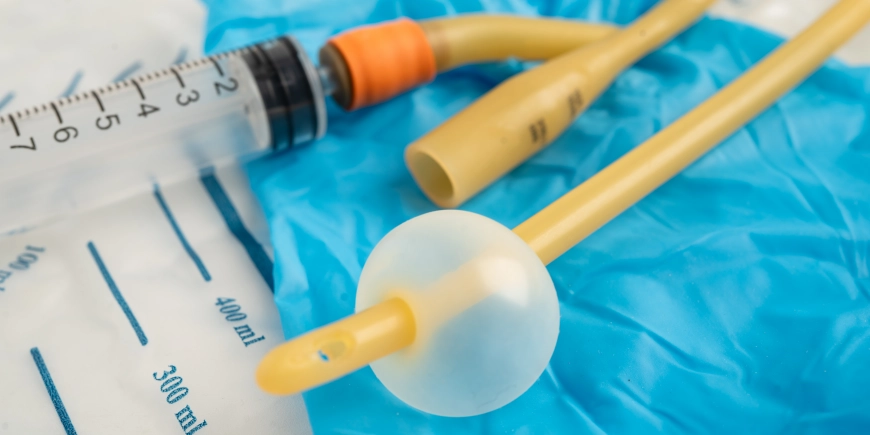
A urinary catheter left inside of you is known as “indwelling” or a “Foley.” It’s what we think of when we think about catheters. These catheters are not fun. They can lead to urinary tract infections, which are even more uncomfortable than the catheter itself, and can lead to additional complications. And those infections need to be treated with antibiotics, which have been overused, leading to antibiotic-resistant bacteria.
And by the way, some people are so distressed by their Foley catheter that they yank it out. This is a really bad idea because the end of the catheter has a small balloon that keeps it in your bladder. That balloon is deflated before the Foley is removed. But if you jerk it really hard, repeatedly, you can pull the whole thing out, tearing sensitive tissues along the way.
What we might call the catheter revolution is a great leap forward in public health, and it’s an interesting story how we got here. Bottom line: We have the government to thank.
Back in the day—by which I mean until 2015, a date I’ll explain in a minute—when you showed up in the hospital or emergency room, one of the first things they did was put a Foley catheter in you. There were multiple reasons that we catheterized so many patients. First, the catheter made it easy to measure urine output. Second, the catheter meant the nurse didn’t have to toilet you; from the nurse’s point of view, it was easier to catheterize you up front than to empty bedpans or help you to the bathroom every time you had to pee. And the catheter also meant no accidents, no patients sitting in their own pee, waiting to be cleaned up. A Foley kept the patient dry, provided data, and allowed the nurse to focus on other tasks. Sounds great, right?
Meanwhile, Foley catheters led to relatively frequent CAUTIs—catheter-associated urinary tract infections. But for doctors, nurses, and hospitals, this was seen as an unfortunate side effect. And for my friends in accounting, this was not necessarily a bad side effect, since hospitals were reimbursed by Medicare and Medicaid for treating UTIs.
Then, in 2005, Congress passed the Deficit Reduction Act (it was signed into law in 2006), which, beginning in 2008, withheld Medicare payments for certain types of infections acquired in the hospital; in 2015, CAUTIs were added to the list of such conditions. This was a huge change. Under the new rules, instead of billing the government insurers for these UTIs, the hospital had to absorb the cost. Hospitals were now incentivized financially to reduce the prevalence of these urinary tract infections. And one way to reduce these infections was to insert fewer catheters.
Almost from the beginning, public health scholars sought to measure whether the new law changed the incidence of UTIs in hospitals. The Centers for Disease Control and Prevention has reported that in the decade leading up to 2024, the number of CAUTIs was reduced by 44 percent. Forty-four percent is a huge reduction in infection rates and beats most estimates of the percent reduction in infections from handwashing.
But there’s a wrinkle: There may not be fewer catheters being used in hospitals, only fewer Foley catheters, the indwelling kind of catheter. At the same time that there’s been a reduction in the usage of indwelling catheters, there have been important innovations in external catheters, which collect urine outside the bladder and have less risk of infection. For men, there had long been condom catheters, receptacles that attached to the end of the penis; they don’t work perfectly, but they at least provided a non-invasive option for urine collection. But condom catheters fell off. Attaching condom catheters could cause skin breakdown, and not every male had the, umm, anatomy at rest to attach a condom cath.
Until recently, there was no reliable external urinary collecting device for women. That changed in 2016, when the PureWick system debuted. The PureWick is a spongy apparatus placed inside the vulva, where it forms a seal, with gentle suction that pulls the urine out. And yes, they also have PureWicks for males. And now there are other brands of external catheters that work the same way.
So when we need to collect urine in the hospital, often to keep someone dry, we use external catheters. This has helped spur the decrease in indwelling catheter-associated urinary tract infections. To be sure, we still use Foley catheters. But now there has to be a real reason, like the opposite problem of incontinence (difficulty peeing) or the need to exactly follow someone’s urinary output. Catheters may be placed during surgery, for example, because if someone is anesthetized or unconscious, they aren’t getting up to use the bathroom. But doctors and nurses are much more cautious than they used to be, and for short-term surgeries they often don’t put Foleys in.
Honey Bunny had a surgery this summer, and although he was under general anesthesia, the doctor expected that the procedure would be short, so no Foley was needed. Before the 2008 change in the law, they would have stuck that Foley catheter right in there. But there has been a catheter revolution, one that has saved money and spared us a lot of unpleasantness. And that made Honey Bunny, and all the rest of us, just a little bit happier and safer.
Wishing you peace and understanding in your healthcare journey,
Gerda Maissel, MD, BCPA

Dr. Gerda Maissel is a Board-Certified Physical Medicine and Rehabilitation physician and a Board-Certified Patient Advocate. Visit her website here.