

Half a Sandwich in My Scrub Pocket: Managing Diabetes During a Nursing Shift.
Half a Sandwich in My Scrub Pocket: Managing Diabetes During a Nursing Shift.
By Sue Adair, BSN, RN
On my way to the bathroom, I would stop at the employee refrigerator, take half a sandwich and four or five baby carrots from my lunch bag, wrap them in a paper towel, and put them in my scrub pocket.
That bathroom break was often the only three to five minutes I could get someone to cover my patients. I ate the sandwich and carrots standing in the bathroom as fast as I could.
That is not something you hear a nurse say out loud very often. Not because it is rare, but because few people describe the details of what nursing can really look like on a relentless day.
I had been a nurse for years. I knew what diabetes could do to the body. The day before, I had bought the right food. That morning, I packed the right lunch and started the shift determined to take care of myself. Then the shift happened: medications, a change in a patient's condition, an admission, a family with questions, and one more urgent need after another. My plan was trampled by reality, and the familiar question showed up: «Why do I even try?»
I was a nurse. I understood diabetes. I knew what I was supposed to do. Knowledge was not the problem. The problem was creating enough room in the workday to actually do it.
That distinction matters in patient advocacy. A client may understand a health condition very well and still need help identifying the barrier, communicating the need, and navigating the system that stands between knowing what to do and being able to do it.
This Is Not a Willpower Problem
When you have spent hours solving problems and have not eaten, the vending machine does not have to offer the best choice. It only has to offer the closest one. The Snickers bar is poised to win that race.
That does not mean you lack knowledge or commitment. It means diabetes management has collided with a workday that has almost no margin. The CDC notes that shift work can interfere with meal timing and diabetes routines, and it recommends preparing food ahead so a workable option is available when convenience foods are tempting. (1. Centers for Disease Control and Prevention, “Diabetes and Shift Work”)
For nurses who use insulin or another medication that can cause hypoglycemia, a missed or delayed meal may be more than a nutrition problem. The CDC considers blood glucose below 70 mg/dL low and warns that confusion or brain fog can impair quick thinking and decision-making. Centers for Disease Control and Prevention, “Treatment of Low Blood Sugar (Hypoglycemia)”
In nursing, that is both a personal health concern and a patient-safety concern. Eating when your care plan requires it is not an indulgence. It is part of staying steady enough to do the work.
For an advocate, the useful question is not simply, «Does this person know how to manage diabetes?» It is, «What is getting in the way of following the plan, and where might advocacy help remove that barrier?»
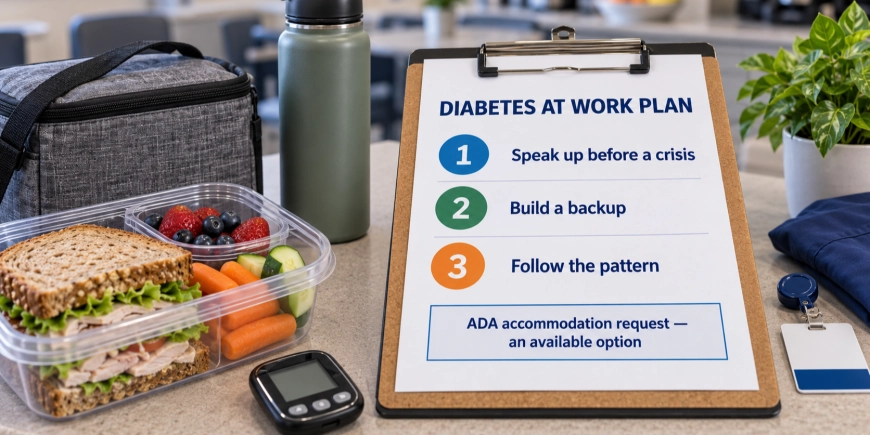
A Three-Step Plan for the Shift That Goes Sideways
1. Help Define the Need Before the Crisis
Do not wait until a client is shaky, foggy, or desperate for food to begin identifying the workplace problem. Help the nurse clarify what the diabetes care plan requires and what is repeatedly preventing that need from being met.
For a working nurse, that may mean asking the charge nurse, supervisor, or person coordinating coverage at the beginning of the shift how the meal break will be protected. The timing should fit the individual's diabetes plan; there is no universal deadline that works for everyone.
A practical script might be: «I need my 30-minute meal break by [time] today. Who will cover my patients while I am away?»
If the usual coverage process repeatedly fails to meet a diabetes-related need, an advocate can help the client identify the employer's formal accommodation process and prepare to communicate the need clearly. EEOC guidance identifies breaks to eat or drink, take medication, or check blood glucose as possible reasonable accommodations for employees with diabetes. The employee does not need to use the words «reasonable accommodation» but does need to explain that a workplace change is needed because of diabetes. When the disability or need is not obvious, the employer may request limited supporting documentation. (U.S. Equal Employment Opportunity Commission, “Diabetes in the Workplace and the ADA”)
A formal-process script might be: «I need a reliable break to eat, check my blood glucose, or take medication because of diabetes. What is the process for requesting that workplace adjustment?»
2. Separate the Health Plan From the Workplace Barrier
The clinician and the person with diabetes determine the health plan. The advocate's role is different: help the client identify what happens when the workplace makes following that plan difficult, what needs to change, and who needs to know.
Protected time for a real meal is the primary plan. A portable backup is what someone may use when a shift temporarily goes sideways; it should not become the standard a workplace expects the employee to accept.
For me, a portable food backup was half a sandwich, baby carrots, and water. For someone else, the right combination may be different. Diabetes meal planning is individualized, especially when medications, activity, and blood glucose patterns are involved. (American Diabetes Association, “Meal Planning”, National Institute of Diabetes and Digestive and Kidney Diseases, “Managing Diabetes”)
Food for a delayed meal and fast-acting carbohydrate for an actual low blood sugar are not the same thing. If the person's treatment plan calls for low-blood-sugar rescue supplies, those should be available too. The CDC's general 15-15 rule for blood glucose below 70 mg/dL is to take 15 grams of carbohydrate, wait 15 minutes, check again, and repeat until glucose is back in the target range. After treating the low, eat a balanced snack or meal with protein and carbohydrates. The individual should follow a clinician's individualized instructions when they differ.
Your low-blood-sugar rescue supplies
Food for a delayed meal and fast-acting carbohydrate for an actual low blood sugar are not the same thing. Keep both available if your treatment plan calls for them. The CDC's general 15-15 rule for blood glucose below 70 mg/dL is to take 15 grams of carbohydrate, wait 15 minutes, check again, and repeat until glucose is back in the target range. After treating the low, eat a balanced snack or meal with protein and carbohydrates. Follow your individualized plan if your clinician has given you different instructions.
3. Help Turn a Bad Shift into a Documented Pattern
One impossible shift is a disruption. Repeated missed meals, delayed breaks, or low blood glucose episodes are a pattern. Patterns need follow-up, not a larger stash of emergency snacks.
An advocate can help the client create a simple record: the date and shift, when the break was expected, when or whether it occurred, relevant glucose readings or symptoms, and whom the client notified. That information helps separate a vague complaint from a specific, repeatable workplace problem. It also gives the clinician useful context. The CDC recommends sharing recurring lows along with food, medication, activity, and glucose patterns with a doctor, and it cautions against changing diabetes medication without clinical guidance.
The same record can help the client prepare for follow-up with a manager, human resources department, or ADA coordinator. The goal is to state the workplace change that is needed and why, while keeping the focus on a solution that allows the person to manage health needs and perform the job safely.
The Standard Should Be Better Than Survival
Half a sandwich in my scrub pocket got me through a shift. It was resourceful. It was also a sign that the system had left no room for a basic health need. Nurses are excellent at improvising, and that strength can hide a broken process for far too long.
Sometimes good advocacy begins by recognizing that a person's resourcefulness is masking a system problem.
For an advocate, the work may be helping a client name the barrier before the crisis, distinguish the health plan from the workplace problem, document what is happening, and prepare to ask for a workable change. The goal is not to take over. It is to help the person use the right process and advocate effectively for the conditions needed to manage health and continue working safely.
A half sandwich in a scrub pocket may get someone through one impossible shift. It should not become the standard they are expected to survive.
About the Author
Sue Adair, BSN, RN, is an independent RN patient advocate and the founder of Thrive 55+ Nursing Advantage™. She brings 28 years of clinical nursing experience and focuses on chronic illness at work, patient advocacy, and sustainable nursing careers for experienced nurses. Learn more at Thrive 55+ Nursing Advantage™.
Educational note: This article provides general educational information, not individualized medical or legal advice. Follow your personal diabetes care plan and your employer's policies, and seek professional guidance for your specific circumstances.
Sources
1. Centers for Disease Control and Prevention, “Diabetes and Shift Work”
3. U.S. Equal Employment Opportunity Commission, “Diabetes in the Workplace and the ADA”
4. American Diabetes Association, “Meal Planning”
5. National Institute of Diabetes and Digestive and Kidney Diseases, “Managing Diabetes”