

📖 Client Education Series: Colon Cancer Screening-What Everyone Over 45 Needs to Know Right Now
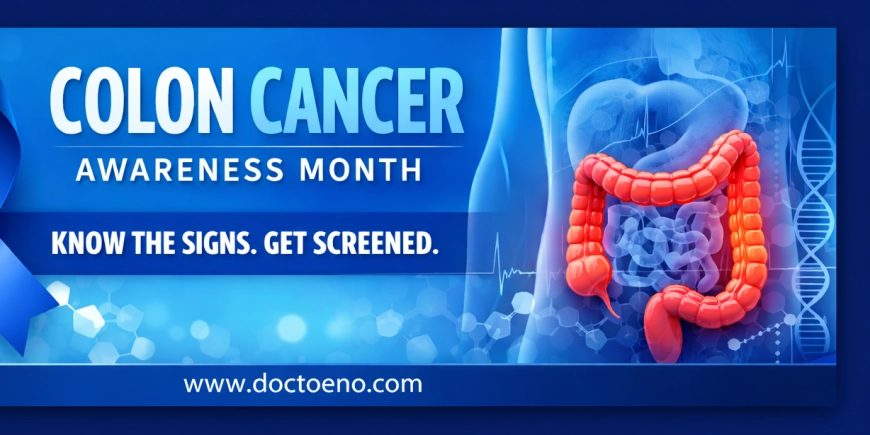
March was Colon Cancer Awareness Month. However, the conversation must continue year-round for how early screening saves lives. Colon cancer is one of the most common cancers affecting both men and women, and it is also one of the most preventable when caught early.
Here's the tricky part: in its early stages, colon cancer often causes no symptoms at all. You can feel completely fine while small growths — called polyps — are quietly developing in your colon. This is precisely why screening is so important.
The good news: Most colon cancers start as small polyps. Screening can find and remove these polyps before they ever turn into cancer. That's not just early detection — that's prevention.
When Should You Start Screening?
If you're at average risk,the current guidelines recommend starting screening at age 45. This recommendation has shifted younger in recent years due to rising rates of colon cancer in adults under 50, so please don't wait.
You may need to start earlier if you have:
- A family history of colon cancer or colon polyps
- A personal history of colon polyps
- Inflammatory bowel disease (Crohn's or ulcerative colitis)
- Certain inherited conditions, such as Lynch syndrome or Familial Adenomatosis Polyposis (FAP)
- If you're older- between ages 76 and 85- the decision to screen should be made with your doctor based on your overall health and past screening history.
What Are Your Screening Options?
There is no single «best» test. The best test is simply the one you actually complete. Here's a breakdown of your options:
- Stool-Based Tests (Done at Home): These tests check your stool (bowel movement) for signs of cancer or precancer — no bowel prep, no sedation, no clinic visit required.
- FIT — Fecal Immunochemical Test: Checks for hidden (invisible) blood in your stool, which can be an early sign of cancer or polyps.
- Done once a year
- Requires only a small stool sample
- No bowel prep or dietary restrictions
- No sedation needed
- A positive result means you'll need a follow-up colonoscopy
- Common brand names: OC-Sensor®, OC-Light®, Hemosure®, QuickVue iFOB®, InSure®
- Most people simply know it as «the home stool test» — quick, private, and easy to do.
- Stool DNA Test (Cologuard®): The stool DNA test takes things a step further — it checks for both hidden blood and abnormal DNA changes that can signal cancer or precancerous cells.
- Done every 1 to 3 years
- Collects a full stool sample in a special kit
- Mailed directly from your home — no lab visit needed
- A positive result means you'll need a follow-up colonoscopy
- The main brand in the United States is Cologuard®.
- FIT — Fecal Immunochemical Test: Checks for hidden (invisible) blood in your stool, which can be an early sign of cancer or polyps.
- Colonoscopy: Colonoscopy is the most well-known screening option — and for good reason. It is both a screening test and a prevention tool, because polyps can be found and removed during the same procedure.
- Done every 10 years if results are normal
- Allows for immediate removal of polyps
- Requires bowel prep (cleansing) the day before
- Performed with sedation —so you'll need someone to drive you home
- While the prep can feel like the inconvenient part, most people find the procedure itself to be far easier than they expected.
Why Screening Truly Saves Lives
Colon cancer typically grows slowly over many years. When it is found early — at Stage I or before — the 5-year survival rate is over 90%. That number drops significantly when cancer is caught at later stages.
Take Action
We know why people put it off. Maybe because you:
- Feel perfectly fine and don't think you need it yet
- Feel embarrassed or uncomfortable with the idea of screening
- Dread the prep or worry that the procedure will be painful
- Keep meaning to schedule it, but haven't gotten around to it
All of those feelings are valid — and incredibly common. But here's what's important to remember: early colon cancer almost never causes symptoms. By the time you feel something, the cancer has often progressed to a more advanced stage.
Screening gives you the advantage of finding problems early — when treatment is simpler, less invasive, and far more effective.
If you are 45 or older and haven't been screened, now is the moment. Please talk to your doctor at your next visit — or send a portal message today. You have options that fit your lifestyle:
- A simple, yearly FIT test — done at home
- A stool DNA test like Cologuard® — done every 1–3 years
- A colonoscopy — every 10 years if normal
Choose the test that works best for you. The most important step is simply starting.