

Why Is It So Hard to Find a Nursing Home Bed? Your Tax Dollars and Scarcity
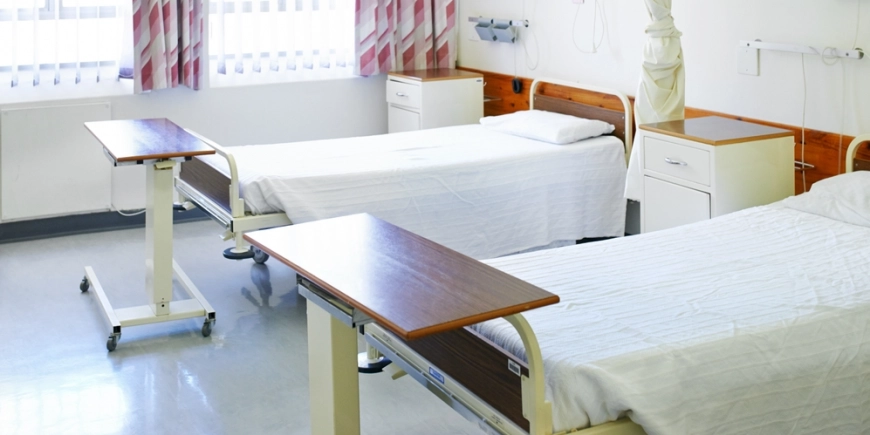
When a family asks me to help move their loved one into long-term care, I ask is the person currently at home, in the hospital, or in a short-term rehab facility. It matters for the family’s plan, but it doesn’t change the brutal reality: finding a long-term skilled nursing bed is extremely difficult.
“Difficult” is an understatement. I recently called every nursing home with ⭐⭐⭐+ on Medicare Care Compare within a 6-hour drive of Arlington, Virginia. Twenty-seven of thirty-nine had no long-term care beds available. The waitlists for those beds range from 3 months to 2 years. Fewer than half of those even keep a waiting list. “It’s first come, first serve, because we just can’t keep up with a list and the callbacks,” one told me.
Where is everyone supposed to go?
Who is this happening to? Not who you’d think. It’s easy to assume the people stuck in this bottleneck are the poorest and sickest, but the hardest to place are often those somewhere in the middle.
- They’re the person who needs custodial care — help with bathing, dressing, eating, toileting, supervision for dementia — rather than those with a need for a short burst of skilled rehab.
- They’re the family that has too many assets to qualify for Medicaid today but nowhere near enough to private-pay a nursing home at $10,000–$14,000 a month for the years that may be ahead.
- They’re the person with dementia and behavioral expressions, or a feeding tube, or need two people to move from bed to chair whom facilities quietly screen out because that resident is expensive and hard to staff.
- And they’re the patient sitting in a hospital bed, medically cleared to leave, with no safe place to be discharged to, occupying an acute bed the hospital needs.
These are ordinary families just following the flow of healthcare, but the system’s incentives and their loved one’s needs are completely misaligned.
Why is it happening?
This is where the tax dollars come in — and it isn’t an argument about “government waste.” The problem is that public money flows into long-term care through two different programs:
First, Medicare pays for short-term skilled care — rehab after a hospital stay— and it pays comparatively well. Original Medicare covers up to 100 days of skilled nursing care per benefit period, with nothing out of pocket for days 1–20 and a daily copay of $217 in 2026 after that.
Second, Medicaid pays for the long-term custodial stays — the open-ended ones with no identifiable endpoint — and it pays badly. Medicaid is the primary payer for nursing homes, but its reimbursement typically covers only 70 to 80 percent of the actual cost of that care. In some states the Medicaid rate is literally below the cost of care, so providers lean on Traditional Medicare, Medicare Advantage, and private-pay residents to offset the loss.
Third: The incentives to the facility are obvious: The same physical bed earns far more with a rotating cast of Medicare rehab patients than it does with one long-term Medicaid resident who may stay for years at a rate that loses money every single day. Facilities protect their rehab capacity and ration their long-term beds. One Admissions Director was very candid about the strategy: “There is no waitlist because we’re converting long-term care beds into rehab beds.” The shortage you hit when you call around isn’t an accident — it’s the rational response to the prices your tax dollars set.
Then layer on two (three) more things.
First, in Virginia (and many other states) you can’t just build a nursing home to meet the demand. Our Certificate of Public Need (COPN) law means the only way to add nursing facility capacity is to get state approval to transfer beds from one existing facility to another — you cannot build new. The supply is legally frozen and beds remain where they were originally built, even in a place like Northern Virginia where demand is exploding.
Second, for two decades state Medicaid policy has deliberately shifted long-term care money out of institutions and into home- and community-based services. Aging in Placehas transformed how we define quality of life as we grow old, and funding it is genuinely good for the many people who can safely stay in their homes, but it also means almost no one has been investing in the long-term bed supply. We redirected funds in good faith, but now there are few beds for people who require hands-on nursing care.
Third: And finally, staffing. A license to operate 120 beds means nothing if you can only staff 90 — and many facilities can’t even do that. Direct care is some of the hardest, lowest-paid work in health care. Nursing homes pay aides in the high teens an hour, and they are competing for the same workers as hospitals, warehouses, and retail. The skilled nursing sector turns over roughly half its workforce every year.
When a facility can’t fill the shifts, it doesn’t just run short-handed — it pulls beds, sometimes whole wings, out of service. Recent surveys have found anywhere from a quarter to more than half of nursing homes limiting admissions or capping their census for lack of staff, meaning that a share of what shows up as “licensed capacity” isn’t a bed anyone can actually move into — the shortage on the ground is worse than the bed count on paper.
Put it together:
Public dollars make short-stay beds lucrative and long-term beds a loss.
State law caps the supply, state policy stopped investing in it.
There aren’t enough workers to staff what exists.
That’s the state of things right now. And in 3 years there will be more people over the age of 65 than people under 18.
How do we fix it?
None of this is unfixable — it’s just unfunded and unpopular:
1. Pay Medicaid at least what long-term care actually costs and tie the rate to staffing so the money reaches the bedside instead of the balance sheet. As long as the biggest payer reimburses below cost, every long-term bed is a bed a facility would rather not offer.
2. Reform COPN regulations so beds can be added where the demand and the workforce actually are, instead of shuffling a fixed number of beds around the map.
3. Invest in the workforce directly — wages, CNA training pipelines, career ladders, and a realistic immigration path for direct-care workers. Beds should follow staff, not the other way around.
4. And stop treating home care and facility care as an either/or. Shifting toward home-based services was right for the people it fits; it was never a reason to let the institutional supply wither for the frailest people who still need it. Fund both.
What am I supposed to do in the meantime?
Because none of that helps the family staring down a discharge date next week, here’s what I advise people to do right now:
1. Apply to several facilities at once the moment you know transfer is coming. Not just the “perfect” one, apply for all the plausible ones. In this market, you are getting in line and you can decline later.
2. Know the Medicare clock. If your person is in rehab, that stay is a countdown, not a guarantee — and it sometimes ends before day 100, whenever they stop showing “progress.” Start the long-term placement search on Day One of rehab, not when the discharge planner hands you the 72-hour notice.
3. Get the level-of-care assessment (UAI) done early. Don’t wait for the crisis to start the paperwork; having it in hand makes it easier for an Admissions Director to say “yes” quickly if they have one bed and three callers.
4. Widen the map. The available bed may be an hour or more away. It is often right to take it, get on the waitlists closer to home, and transfer later. A safe bed far away beats an unsafe situation nearby.
Line up a bridge. In-home care or assisted living with private-duty aides can hold the line while you wait for a skilled bed as long as you’re honest about whether that arrangement is safe and appropriate to their needs.
5. Start Medicaid planning before you think you need to, especially if it’s a program you never thought you’d use. Eligibility and spend-down take months, and the bed and the payer source are two separate problems that both take time. Deal with them in parallel.
6. Use your resources: the hospital social worker, the discharge planner, a care manager. Know that you have appeal rights if you believe a discharge is unsafe. You do not have to accept “first come, first serve” as the whole answer — but you do have to move early, and move on several fronts at once.
Bottom line: Familiesare not failing at this. The market is. Until the money and the rules change, the job is to out-prepare the system.
Bio:
Nadene Bradburn is the Founding President of Elder Care Advocates. The company helps families make clear, informed choices when elder care becomes complex, urgent, or emotionally charged. We offer structured guidance through situations where medical, legal, financial, and emotional factors collide — starting with a comprehensive assessment and strategy report that brings the full picture into view.
If you’re navigating a denial and aren’t sure where to start, a consultation can help you understand your options before deadlines pass. To learn more, visit my website at The Elder Care Advocate, which helps families make clear, informed choices when elder care becomes complex, urgent, or emotionally charged. We offer structured guidance through situations where medical, legal, financial, and emotional factors all collide--starting with a comprehensive assessment and strategy report that brings the full picture into view.
To learn more, visit my website at The Elder Care Advocate