


You’ve Taken Delivery of Your Lower Limb Prosthesis. Now What?
As an amputee coach, I look at the whole person, whether you choose to wear a lower limb prosthesis or not.
For those who choose to wear a prosthesis, it often takes a great deal of paperwork, documentation, and time to prove medical necessity for the initial device and future replacements. Behind every approval is a coordinated process involving physicians, prosthetists, therapists, and insurance requirements.
But once you leave the clinic and sign the delivery sheet, your real lifelong prosthetic journey begins.
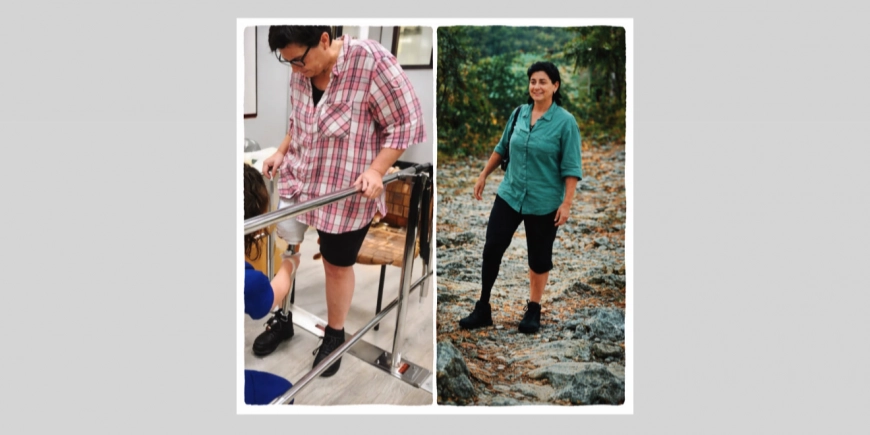
The clinic is often a controlled environment, with parallel bars, flat surfaces, and focused supervision. Everyday life is different. Uneven ground, curbs, ramps, stairs, fatigue, distractions, carrying items, and unpredictable surfaces all become part of the experience.
A lower limb prosthesis is more than equipment. It becomes part of how you move through your day.
Successful use depends on many factors working together:
• Healed residual limbs
• Proper socket fit
• Appropriate suspension
• Alignment
• Shoes that work with the prosthesis
• Assistive or supportive devices, if needed
• Mental health and emotional support
Sometimes the prosthesis feels harder than expected. Walking may take more energy. Confidence may not come as quickly as hoped. Many people quietly blame themselves and believe they are not progressing the way they should.
Often, it is not a personal failure. It may be a combination of fit, alignment, physical changes, confidence, energy level, or emotional fatigue.
We are all different. What works for one amputee may not work for another.
Support people and even healthcare providers may unintentionally compare someone to another amputee with a different level of amputation, medical history, activity level, or recovery timeline. Even well-intended comparisons can increase pressure and self-doubt.
Sometimes it takes multiple visits and a series of adjustments to help a prosthesis fit and function optimally. Progress is often a process.
I am not your treating clinician or prosthetist. I do not evaluate, prescribe, or adjust prosthetic devices, and I do not replace your prosthetist or therapist. My role is to support you.
You have the right to invite a support person or coach into your healthcare conversations. With your permission, I can participate to help clarify concerns and support communication.
When prosthetic fit and function questions arise, I support you in understanding what may be related to the prosthesis and what may be related to strength, balance, or gait. Because prosthetic mechanics are highly specialized, concerns about fit and alignment can sometimes overlap with physical or functional challenges. I help you recognize these differences so you can communicate clearly and confidently with your healthcare team.
The goal is not to direct your care, but to support understanding, collaboration, and confidence throughout your prosthetic journey.
Support, education, and perspective can make a meaningful difference in long-term success and quality of life after amputation.
Every prosthetic journey is different, and progress looks different for everyone.
Learning how to advocate for yourself is part of the journey. If you would like guidance, support, or community, you are welcome to reach out or join Amputees Preparing Amputees 4 Life (APA4L) or APA4L: Single-Leg Above Knee Amputees.
 AnnMarie Cross
7 months ago
AnnMarie Cross
7 months ago
 Tracy Kersey
7 months ago
Tracy Kersey
7 months ago