

Insurance & Billing
Resourceful Advocates Who Tackle Medical Charges and Fight for Insurance Benefits.
Any success with online proxy access to Insurer sites?
1. Has anyone had success getting proxy access to a client's online insurance portal? I've not had much trouble getting clients' insurance... See More
108 views
No comments
Medical Travel
Does anyone know how to get supplemental insurance to get surgery in Germany? See More
113 views
 Kimberlie Williams-Feth, BSW
21 day ago
Kimberlie Williams-Feth, BSW
21 day ago
Try reaching out to Natasha Romantal, you can find her by searching for her on the GNA database.
KX Modifier - Medicare coverage of PT
I have a client on Traditional Medicare who has been getting PT twice a week and is nearing her $2480 cap of coverage. The outpatient rehab office... See More
494 views
Kimberlie Williams-Feth, BSW
2 months ago
You are correct, for 2026, CMS set the KX modifier threshold at $2,480 for PT and SLP combined with a separate $2480 for OT services.
Generally speaking, $2480 isn't a «hard» cap, it's a «soft cap». The KX modifier isn't a magic bullet, but it tells Medicare that the services are still needed and the medical necessity is contained in the medical record.
That having been said, Medicare can still deny it or pay it now and audit the provider later.
My favorite «go to solution» for situations like this are the FREE, DPT-student-led clinics for any patient who lives near a university or college with a PT program. Those clinics were meant to serve the people you're describing here — out of resources but still in need; while teaching the future DPTs. Availability may vary based on the university, the current patient load, and the academic school year calendar.
When my husband utilized a free DPT clinic, he received simultaneous services from: one, 3rd year DPT student, two, 2nd year DPT students, was observed by multiple undergrads, and had between 1-2 professors also treating and supervising.
Hope this helps!
Generally speaking, $2480 isn't a «hard» cap, it's a «soft cap». The KX modifier isn't a magic bullet, but it tells Medicare that the services are still needed and the medical necessity is contained in the medical record.
That having been said, Medicare can still deny it or pay it now and audit the provider later.
My favorite «go to solution» for situations like this are the FREE, DPT-student-led clinics for any patient who lives near a university or college with a PT program. Those clinics were meant to serve the people you're describing here — out of resources but still in need; while teaching the future DPTs. Availability may vary based on the university, the current patient load, and the academic school year calendar.
When my husband utilized a free DPT clinic, he received simultaneous services from: one, 3rd year DPT student, two, 2nd year DPT students, was observed by multiple undergrads, and had between 1-2 professors also treating and supervising.
Hope this helps!
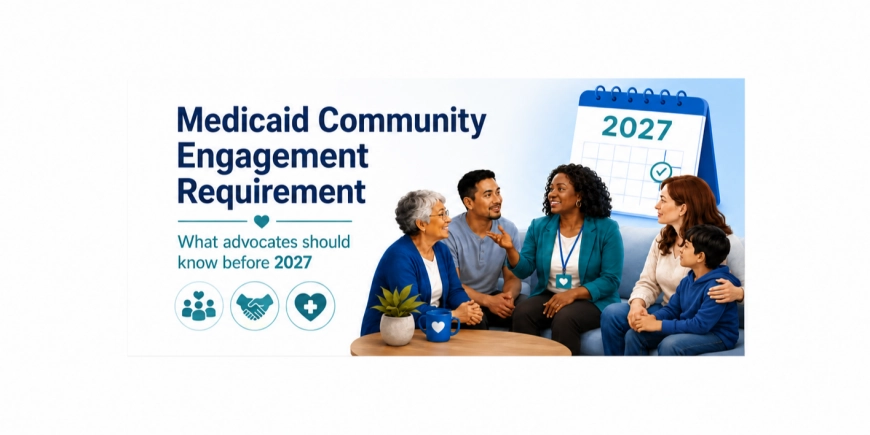
📢 New Medicaid Community Engagement Requirement: What Advocates Should Know for 2027
How many times have you supported a patient or caregiver who was overwhelmed by medical bills, losing coverage, unable to afford care, or facing... See More
670 views
 AnnMarie Cross
3 months ago
AnnMarie Cross
3 months ago
THANK YOU for sharing!
Medicare access questions
I'm working with a client who is 26 years old, currently receiving Medicaid coverage and is unable to work. They are seeking a procedure that is... See More
696 views
Dalia Cabrera
4 months ago
Hi Marty! Your question is very interesting.
Medicare eligibility due to disability is usually connected to SSDI, not SSI. In most cases, once a person is approved for SSDI, there is a 24-month waiting period before Medicare coverage can begin.
Because every situation is different, the best next step would be for the patient to contact the Social Security Administration directly to confirm whether he may qualify for SSDI. My understanding is that the 40-quarter requirement is mainly related to retirement benefits, and SSA may apply different work-credit rules for disability benefits, especially for younger individuals who have not had enough time to build a long work history.
It may also be helpful for the patient to ask SSA to explain the possible benefits, limitations, and long-term impact before making a final decision. If disability benefits are approved at a young age, it may have future implications for earnings and benefits, so it is important that he receives guidance directly from SSA.
My suggestion is for the patient to call SSA, confirm his eligibility, ask about the pros and cons, and then decide whether moving forward with the SSDI application is the best option for his situation.
I truly hope this info helps you guide your patient toward the next steps that are best for her/his/their situation. Have a great day!
Medicare eligibility due to disability is usually connected to SSDI, not SSI. In most cases, once a person is approved for SSDI, there is a 24-month waiting period before Medicare coverage can begin.
Because every situation is different, the best next step would be for the patient to contact the Social Security Administration directly to confirm whether he may qualify for SSDI. My understanding is that the 40-quarter requirement is mainly related to retirement benefits, and SSA may apply different work-credit rules for disability benefits, especially for younger individuals who have not had enough time to build a long work history.
It may also be helpful for the patient to ask SSA to explain the possible benefits, limitations, and long-term impact before making a final decision. If disability benefits are approved at a young age, it may have future implications for earnings and benefits, so it is important that he receives guidance directly from SSA.
My suggestion is for the patient to call SSA, confirm his eligibility, ask about the pros and cons, and then decide whether moving forward with the SSDI application is the best option for his situation.
I truly hope this info helps you guide your patient toward the next steps that are best for her/his/their situation. Have a great day!
Tammy Krack
4 months ago
If someone is receiving SSI/SSDI under the age of 65 they will be eligible for medicare after 2 years. I would find out why the procedure is not covered and go from there.
 Sheri Gaynor
4 months ago
Sheri Gaynor
4 months ago
I believe after 2 years they become eligible for Medicare. What’s their diagnosis and what is the procedure?
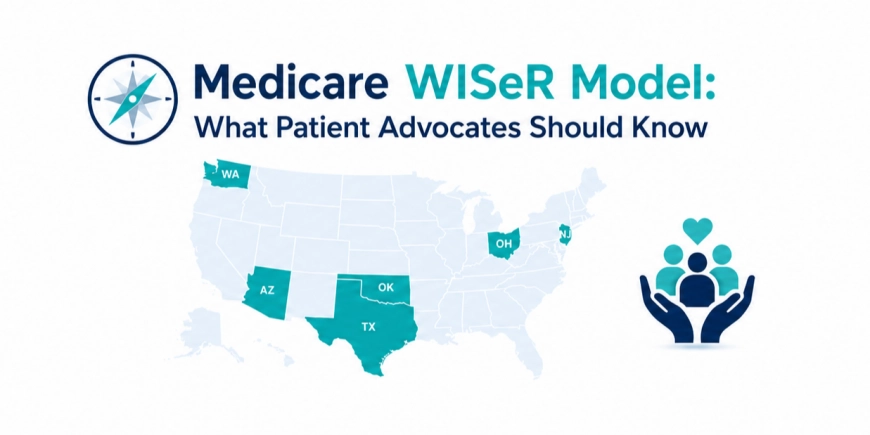
🧭 Medicare WISeR Model: What Patient Advocates Should Know
🚨 Medicare info for patient and healthcare advocates Patient and healthcare advocates working with clients in Arizona, New Jersey, Ohio, Oklahoma... See More
680 views
 Ron Shinkman
2 months ago
Ron Shinkman
2 months ago
Here is an investigative article I recently wrote on WISeR: www.thinkglobalhealth.org/article/ai-driven-pilot-program-delays-access-to-care-for-americans
Kimberly Russell
4 months ago
Good information to know. Thank you Dalia.
Ron Shinkman
4 months ago
Good information. I have an investigative journalism piece on WISeR that will likely be published later this month and will share.
Independent Advocates that bill Medicare for advocacy services
Hello fellow advocates! I’m seeking independent advocates that currently bill Medicare and private insurance for your advocacy services. I am... See More
702 views
 Aimee Dundas
1 month ago
Aimee Dundas
1 month ago
I would really like to connect with others about this because I have been working on this issue for over a year.
When Medicare began covering Principal Illness Navigation (PIN) services in 2024, I was very hopeful that this would finally give more patients access to professional navigation services. Unfortunately, as an independent navigator, I have found actually getting these services reimbursed to be extremely difficult.
In the process I have been working through, the treating practitioner who establishes the care plan—such as the oncologist or radiation oncologist—must be involved, and the navigator's services are connected to that practitioner's billing. I have also encountered requirements involving reassignment of benefits and documentation identifying the PIN services/navigation being provided. In my situation, we have been working with the G0023/G0024 PIN service codes.
This is where I keep hitting a wall.
Many physicians and practices understandably do not want to enter into a reassignment/billing arrangement with an independent navigator because of the administrative responsibility, compliance concerns and potential risk to their practice.
I have had several conversations and meetings regarding Medicare enrollment and billing trying to determine whether there is a compliant way for an independent PIN to provide these services without creating such a burden for the treating physician. So far, I have not found a workable solution.
What frustrates me most is the impact on patients. I see people who genuinely need navigation services but cannot afford private-pay advocacy. Medicare created PIN services specifically to address many of these needs, yet accessing the benefit through an independent navigator seems incredibly difficult.
Has anyone here successfully created a model where an independent navigator provides PIN services that are billed to Medicare?
I would especially love to hear:
• How are you structured with the physician/practice?
• Who bills Medicare?
• Did you need a reassignment of benefits?
• How did you handle the initiating visit and care plan requirements?
• How are you compensated by the billing practice?
• Have you found a compliant model that doesn't place an unreasonable administrative burden on the physician?
If anyone has successfully navigated this, I would really appreciate connecting and comparing notes. After more than a year of working on it, I would love to find a practical solution—especially because there are so many patients who need these services and simply cannot afford to pay for them out of pocket. Feel free to contact me via email at Aimee@CCC.Care or leave me a message here. Thanks
When Medicare began covering Principal Illness Navigation (PIN) services in 2024, I was very hopeful that this would finally give more patients access to professional navigation services. Unfortunately, as an independent navigator, I have found actually getting these services reimbursed to be extremely difficult.
In the process I have been working through, the treating practitioner who establishes the care plan—such as the oncologist or radiation oncologist—must be involved, and the navigator's services are connected to that practitioner's billing. I have also encountered requirements involving reassignment of benefits and documentation identifying the PIN services/navigation being provided. In my situation, we have been working with the G0023/G0024 PIN service codes.
This is where I keep hitting a wall.
Many physicians and practices understandably do not want to enter into a reassignment/billing arrangement with an independent navigator because of the administrative responsibility, compliance concerns and potential risk to their practice.
I have had several conversations and meetings regarding Medicare enrollment and billing trying to determine whether there is a compliant way for an independent PIN to provide these services without creating such a burden for the treating physician. So far, I have not found a workable solution.
What frustrates me most is the impact on patients. I see people who genuinely need navigation services but cannot afford private-pay advocacy. Medicare created PIN services specifically to address many of these needs, yet accessing the benefit through an independent navigator seems incredibly difficult.
Has anyone here successfully created a model where an independent navigator provides PIN services that are billed to Medicare?
I would especially love to hear:
• How are you structured with the physician/practice?
• Who bills Medicare?
• Did you need a reassignment of benefits?
• How did you handle the initiating visit and care plan requirements?
• How are you compensated by the billing practice?
• Have you found a compliant model that doesn't place an unreasonable administrative burden on the physician?
If anyone has successfully navigated this, I would really appreciate connecting and comparing notes. After more than a year of working on it, I would love to find a practical solution—especially because there are so many patients who need these services and simply cannot afford to pay for them out of pocket. Feel free to contact me via email at Aimee@CCC.Care or leave me a message here. Thanks
Tammy Krack
4 months ago
Hi Natasha,
The only Independent Advocate that I know that is billing Medicare is Terry McLellan — Sunnavhca. She is located in TX. I'm sure she will be happy to have a conversation with you. Here's her email: terry@sunnavhca.com
Let her know I referred you.
Tammy
The only Independent Advocate that I know that is billing Medicare is Terry McLellan — Sunnavhca. She is located in TX. I'm sure she will be happy to have a conversation with you. Here's her email: terry@sunnavhca.com
Let her know I referred you.
Tammy
Medicare enrollment
Has anyone successfully completed Medicare enrollment as an independent RN providing patient advocacy/care coordination. If so did you need a... See More
1 347 views
AnnMarie Cross
6 months ago
Hi, Rachel!
Do you mean you are trying to become an advocate who accepts Medicare?
if so, there are a number of agencies around the country that accept Medicare. It is my understanding that an RN must work under a licensed supervising clinician, and the setup is long, indepth and complex. I know of one RN advocate who is deep into the process and actually building a training program she intends to offer once she has reached sort of 'a good endpoint' with the process.
I hope other nurses might respond here to provide more information, although if this question is about accepting Medicare as reimbursement, it's likely in the wrong conversation space, and I can move it for you.
If you would like the list of agencies that we at GNA are aware of and have had at least some contact with/knowledge of, feel free to ask. I'll gladly share it here.
Do you mean you are trying to become an advocate who accepts Medicare?
if so, there are a number of agencies around the country that accept Medicare. It is my understanding that an RN must work under a licensed supervising clinician, and the setup is long, indepth and complex. I know of one RN advocate who is deep into the process and actually building a training program she intends to offer once she has reached sort of 'a good endpoint' with the process.
I hope other nurses might respond here to provide more information, although if this question is about accepting Medicare as reimbursement, it's likely in the wrong conversation space, and I can move it for you.
If you would like the list of agencies that we at GNA are aware of and have had at least some contact with/knowledge of, feel free to ask. I'll gladly share it here.
Introduction
Hi all! I introduced myself in the 'All Channels' area and it was suggested that I also post here with all my experience with advocating for people... See More
1 323 views
AnnMarie Cross
6 months ago
Thanks for sharing, karen! Id love to see you start a conversation about long term care claims, knowing that's a niche you know well.
New Podcast Episode: The Reality of Medicare's 2026 Drug Price Negotiations
This year, Medicare's newly negotiated prices for 10 common, high-cost drugs (including Eliquis, Xarelto, and Jardiance) have officially... See More

1 329 views
2026 Prescription Drugs
Just a note: Most Medicare Prescription Drug plans for 2026 have a drug deductible on tiers 3-5, even on Medicare Advantage Plans. ... See More
1 318 views
AnnMarie Cross
8 months ago
Thank you! this post is HUGELY helpful!

Breaking Good-Saving Walter White
The series “Breaking Bad” kept TV audiences (including myself) enthralled with all the twists and turns, all fueled by the main... See More

2 079 views
Victoria Killian
9 months ago
Such a great scenario to give that allows clients to more easily understand the benefit of advocates!
AnnMarie Cross
9 months ago
LOVE this!
Podcast With Jeff Byars, Lifelong First Responder and Award-Winning Advocate
Click here to view the podcast now! This is the story of a rural EMT (Emergency Medical Technician) who made the career decision to become... See More

1 289 views
Guiding Lives Through Advocacy With Sensitivity featuring Lisa Berry Blackstock
In this powerful episode of Patient Advocacy Now, Lisa Berry Blackstock, founder of Soul Sherpa, shares her remarkable journey from estate... See More

1 306 views