

Medical Guidance General
This community space is for discussing medical guidance topics that are broader, more general, or do not fit into the other categories.
Weekly AI and Healthcare Policy Stories
We run a daily intelligence filter on clinical AI and healthcare policy so you don't have to wade through vendor press releases. Here are the two... See More

75 views
4 comments
 Tiffany Hare
3 days ago
Interesting read, thank you for sharing these articles. I have seen AI inaccuracies first hand, a bit worrisome if physicians start relying on it more than their own education and coworkers to diagnose and treat.
Renea Stasaski
6 days ago
Link for #2: www.healthcaredive.com/news/despite-concerns-ai-becomes-daily-fixture-in-physician-workflows/874541/
Renea Stasaski
6 days ago
Link for #1: www.ama-assn.org/health-care-advocacy/advocacy-update/nov-13-2026-national-advocacy-update
What's Your Go-To When You Need a Lift?
Hi friends & colleagues! We talk a lot about resilience in this work. But resilience doesn't just come from pushing through &mdash... See More
112 views
Tiffany Hare
7 days ago
Movement, dancing, or yoga are good stress relievers for me but music and gardening are my joy and bring me comfort. There's something special about getting my hands dirty while helping something grow. Some days its just watching and watering but it brings peace to my chaos. Music is always on in my house and you can generally tell my mood based on my playlist.
Sharon Gibson
12 days ago
For me it’s children and animals. I love playing with them both. The laughter of children, purr of a cat, and love and excitement in a dog’s eyes always make me feel better. :)
 AnnMarie Cross
12 days ago
Thanks for asking, Val!
My new approach is… gardening. At 58. I've got 2 black thumbs, have had my whole life. But a rose bush brought me joy during a really dark time a handful of years ago. Then it was two. Then i helped my daughter as she built a garden that brings her serious peace.
So this week, I finished my own 2'x20' raised bed garden of wildness.

Insurance Brokers
Who are your go to insurance brokers? With the increase in health insurance cost, I am getting several calls from people seeking assistance... See More
110 views
AnnMarie Cross
14 days ago
This is a great ask, Jeff! Love it.
I just had to do my own, personally, and have a broker i trust here in Texas.
Janice Kapp
AUSTIN METRO
Sr. Benefits Advisor | Independent Agent
Cell: 432-553-5332
512-827-8117
janice@jkappconsulting.com
jkappconsulting.com
I just had to do my own, personally, and have a broker i trust here in Texas.
Janice Kapp
AUSTIN METRO
Sr. Benefits Advisor | Independent Agent
Cell: 432-553-5332
512-827-8117
janice@jkappconsulting.com
jkappconsulting.com
Has anyone else found these things in a medical record? ...
I was reviewing records for a client’s bill and found something I hadn’t seen spelled out so clearly before: the physician’s... See More
246 views
Rachel Garvin
9 days ago
I wonder if the doctor was covering their butt. If I knew an algorithm was deciding to DC my patient before I felt it was safe I might document something similar to show that I was against the DC. I’m a nurse.
Mwatabu Terrell
15 days ago
I have personally never heard of this occurring. But it is also unusual for a doctor to be able to predict when a patient will be ready for discharge and put that into a chart. Can you tell me what type of facility the patient was in? Inpatient acute care hospital, LTAC, ERF, SNF or a psychiatric facility?
Z. George Grekos
16 days ago
An algorithm or an automated tool can never override a physician's order however, a physician may agree or be pressured to agree with an algorithm, but the final discharge order has to be given by the physician at the time when he/she feels the patient is ready to be discharged with any pending contingencies taken care of first. If you had been on board at the time, it would've been simple to contact the physician and get some clarification as to when the patient should be discharged based also on your overall assessment of the appropriateness of the discharge timing.
When Patient Advocacy Meets Healthcare Surrogacy / Healthcare Proxy: Where Do We Draw the Line?
I'd love to start a conversation with fellow advocates about an important consideration in professional patient advocacy: serving as both an... See More
236 views
AnnMarie Cross
15 days ago
Perfect timing — NAHAC is doing a seminar on this topic!
nahac.com/current-events-calendar
nahac.com/current-events-calendar
Alison Stohler
18 days ago
That flight nurse sounds absolutely amazing! What an incredible example of going above and beyond to ensure continuity of care. I love that she can step into different roles while maintaining such a strong focus on her client's needs.
I also completely agree about keeping services separate. I use two separate contracts for my independent patient advocacy and professional healthcare surrogate services. I think that distinction is important for clearly defining responsibilities, expectations, and professional boundaries.
I also completely agree about keeping services separate. I use two separate contracts for my independent patient advocacy and professional healthcare surrogate services. I think that distinction is important for clearly defining responsibilities, expectations, and professional boundaries.
Vickie Stoll
18 days ago
Speaking of Healthcare Surrogacy’s… I recently had a request to be a Healthcare Surrogate for a couple, I reached out to my insurance company NEXT to find out if this was covered under my policy, and was told no and that they don’t have an option to offer me. I am located in Florida, please advise what which insurance company you use.
How to handle clients with opioids dependence?
Hi! As a Liaison of the Advocacy Support Center I've read many situations that patients are going through. We have received several calls regarding... See More
286 views
 Sheri Gaynor
15 days ago
I have an Oregon nursing license. Their board requires you to complete a pain management course, which I found helpful. Here is the link: www.oregon.gov/oha/HPA/dsi-pmc/Pages/module.aspx
I have a few other resource documents I'd be happy to share. If interested, send me your email address, and I'll forward them to you. :)
I have a few other resource documents I'd be happy to share. If interested, send me your email address, and I'll forward them to you. :)
 Lauren Wheeler
1 month ago
Thanks to Amanda for commenting! All great stuff in there (as expected from our advocacy pain expert).
I had a few months where I was getting tons of these calls myself, so I found some literature and resources. Some is specific to California, and most of my little comments are written for a patient/client email, but you'll get the idea! (Also, I haven't checked most of the links in a few years, but hopefully they are all good. Comment if you find a broken one.)
This fact sheet comes from a group dedicated to policy advocacy for people with chronic pain. nationalpain.org/fast-facts-opioids and this one is a curated list of some of the literature about the harms of tapering against the physicians best medical judgement: nationalpain.org/resources-pain-opioids-patient-harm#facts
More resources from them: nationalpain.org/resources
California state guidelines on opioid prescription: (see page 14 on tapering)
www.mbc.ca.gov/Download/Publications/pain-guidelines.pdf -this one may be a bit hard to read, but it talks about all of the good reasons to reduce a person's dosage of pain meds and why and when and how to do it carefully. Basically it needs to be done with you (the patient) making decisions together with the doctor.
AMA Ethics article about non-consensual tapering: journalofethics.ama-assn.org/article/nonconsensual-tapering-high-dose-opioid-therapy-justifiable/2020-08
This piece was written by a doctor who has experience with chronic pain — its a great read, but it is a little complicated. There are tons of links to studies that your doctor will appreciate, and there is a numbered list of things you can try saying. stefankertesz.medium.com/my-doctor-says-they-have-to-lower-the-long-term-opioid-what-can-i-do-what-do-i-say-b3d35776379e
All that said, there ARE reasons to want to taper opioids, especially for long-term non-cancer pain. They have side effects. So if I can get the client/patient on board with the goal of «pain management» over the goal of «getting my meds» then I want to get them adjuncts. I like the metaphor of a car with 4 flat tires — even if acupuncture (or whatever) alone isn't going to get you back to functional, then maybe acupuncture + a pain psychologist + massage + gabapentin will… This is where I heard that analogy: www.acpanow.com/#/ and they have peer support groups, iirc.
And this is a directory of pain psychologists and some resources: aapainpsychology.org/resources/
I also saved a link to this app, but I don't know if it's good and haven't talked to anyone who's used it.
Curable — The App for Chronic Pain (https://www.curablehealth.com/)
-app for coaching, some CBT, mindfulness/grounding exercises, meditations, visualizations, motor imagery, education, stories of others
-2 week free trial, then paid. $16/month, or $8/month if you buy a year.
As an anecdote, I have an older family member who lives with chronic pain and many other conditions. She's done great with buprenorphine patches, in part because they come with a pain management team (RN she can call when she has questions, and a doctor who regularly prescribes this med and suboxone) — really better than she ever did on oxycodone pills. So, definitely agree that it's worth suggesting callers ask their doctors if they know anyone who can do this and refer out.
 Jennifer Stephens
1 month ago
I mostly manage opioids for GI and cancer clients. Here are some short- and long-term approaches I use, including some of what's been mentioned here.
In the short term, I encourage my clients to track their pain level (1-10) and medications by time of day. If they have the bandwidth, I also encourage them to note the pain location and a description (sharp, searing, dull, etc.). When they talk about their pain with their providers, I may ask them to share what their pain has stopped them from doing (if they shared something relevant with me beforehand). Sharing this information with providers can help them get a fuller picture when making their assessment and prescribing.
I also encourage clients to be completely honest about their (legal and illegal) drug use; to obtain and learn how to use Narcan; and to prepare/share a list of how they manage their pain besides medication (e.g., meditation, therapy/support, yoga, TENS machine, acupuncture, etc.). Showing all the pathways the client has taken supports their valid requests.
It's critical I make clear to the provider which medications have been stopped or are inaccurate. Sometimes a clerical error for a drug that is no longer taken is enough to make a provider hesitant to prescribe more or something else. This is where I step in as an advocate to speak for the patient to share if a script was never picked up, whether the supply was completed as expected, or details on the dosage, frequency, and situation when a specific drug did/did not work.
When the client is struggling to understand why they are having trouble getting a prescription, I will share information or provider chart notations from the client's chart; for example, when they are outside the average on their ED screening scores. This can help clients understand where providers may be coming from.
Like Ilene, I've found that in the long term, connecting clients with a pain management, palliative, or hospice care provider TEAM is the best long-term option. I've found they are more knowledgeable and willing to discuss not only opioid drugs but also the medications to combat the side effects of opioids and other medical and non-medical options, including, but not limited to, mental health and cannabinoid products. In addition, they can best help manage tapering down and the side effects of withdrawal.
Why a team? So clients have access to multiple providers as needed, may be eligible for home visits, and often have a more responsive 24/7 line to call. This is also helpful when the patient has to go to the hospital or their PCP in crisis because there's a record that they have a palliative care team that can advise them and that someone specific is managing all pain medications.
Finally, when working with the provider and client, I will advocate for or ask, «What else?» Alternative options I've pursued or had patients prescribed include lidocaine patches, a nerve block, prescription NSAIDs (e.g., celecoxib and Toradol), and anti-anxiety medications.
Intro: PhD Level Research offered & specialize in urology/sexual health and rare genetic conditions
Hi everyone, I’m Lola Lozano, and I run Osér Clair, a virtual health research and advocacy practice. I started it after coordinating... See More
235 views
 Nancy Keller
1 month ago
Hi Lola. Welcome! I'm a PhD in Tucson AZ, degree in Pathology. I struggled with genetics a lot!!! I don't really focus on rare diseases, although I will tackle almost any condition.
I grew up in Des Moines and know what a great school U of Iowa is. I give you a lot of kudos for keeping at your degrees at the same time taking care of your mother. You will be great at advocacy.
Best of luck in your future endeavors.
-Nancy
StepwisePatientAdvocacy.com
I grew up in Des Moines and know what a great school U of Iowa is. I give you a lot of kudos for keeping at your degrees at the same time taking care of your mother. You will be great at advocacy.
Best of luck in your future endeavors.
-Nancy
StepwisePatientAdvocacy.com
Rachel Garvin
1 month ago
Welcome to this space! Your expertise is greatly needed and I look forward to seeing where your business takes you.
AnnMarie Cross
1 month ago
Lola,
Thanks for sharing your unique background! we're so glad you're here
could i suggest adjusting the title of your post to help others know your unique niche? i can edit it for you if you prefer.
Thanks for sharing your unique background! we're so glad you're here
could i suggest adjusting the title of your post to help others know your unique niche? i can edit it for you if you prefer.
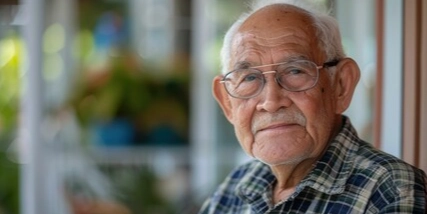
Information Without Interpretation: Why patients and their care partners leave appointments confused
The moment Earlier today, George sat in the exam chair like he’s bracing for impact - politely, quietly, with the practiced patience of... See More
307 views
Tiffany Hare
1 month ago
Great post! I am also in SWFL and see this too often with our seasonal residents. Thanks for sharing
AnnMarie Cross
1 month ago
carolanne,
thanks for making htis post/!
can i suggest that you also submit it as a blog? it will get seen by a different readrership there, and we'd love to have it in both places.
thanks for making htis post/!
can i suggest that you also submit it as a blog? it will get seen by a different readrership there, and we'd love to have it in both places.

Life Is Made Up of Short Stories
There is a quiet truth that most of us don't slow down long enough to notice: our lives are not one long, continuous narrative. They are a... See More

312 views
Looking for Chicago based advocates for diabetes or dementia patients
I am reaching out to Chicago-based advocates on behalf of our team. We recently had individuals contact us who are seeking advocacy support in the... See More
319 views
 Mel Randle
3 months ago
Hi, I’m Mel, a board-certified Adult-Gerontology Acute Care Nurse Practitioner. I have 20 years of experience in endocrinology, intensive care, and diabetes management. I also have extensive personal and professional experience supporting individuals and families affected by dementia. I am based in the Chicago area and offer self-pay services; I do not accept insurance. I would be happy to partner if self-pay is an option for you.
Tiffany Hare
3 months ago
Hi Xena,
I am not in the Chicago area but may be able to help virtually if the clients are in a position to do so. Feel free to reach out if I can be of assistance.
I am not in the Chicago area but may be able to help virtually if the clients are in a position to do so. Feel free to reach out if I can be of assistance.
 Marilyn Kier
3 months ago
Hi Xena,
Thanks for reaching out! I live in a northern suburb of Chicago and have extensive experience with Diabetes Management.
I offer a 10-minute complimentary consultation to clients and work both in person and virtually. I'd love to discuss more to determine if I'm a good fit for collaborating with you and your client.
I'm getting married in 2 weeks and will be available to take on new clients after 9/7.
Meanwhile, I hope you find some great advocates who can help!
Marilyn Kier, BCPA, BCTMB

Patient Advocate Networking
Hi! I'm Rebecca, an LA-based independent patient advocate starting my practice, Whole Story Advocacy, focusing on clients with chronic pain. and I... See More
372 views
Amy Kaidi
3 months ago
Hi Rebecca,
I’m in Orange County and would love to connect. I tried emailing you but it was returned as undeliverable.
My email is amy@entrustedhealthadvocates.com
I’m in Orange County and would love to connect. I tried emailing you but it was returned as undeliverable.
My email is amy@entrustedhealthadvocates.com
AnnMarie Cross
3 months ago
hi Rebecca! We've got quite a lineup of advocates in the LA area.
I'm used the PA360 message feature to these advocates and encourage them to join this post. you can also do the same- use this search,and use the 'write a mesasge" to connect to any advocate.
gnanow.org/advocates?search_type=speciality_id&speciality_id=18&locations=Los+Angeles%2C+CA%2C+USA
I'm used the PA360 message feature to these advocates and encourage them to join this post. you can also do the same- use this search,and use the 'write a mesasge" to connect to any advocate.
gnanow.org/advocates?search_type=speciality_id&speciality_id=18&locations=Los+Angeles%2C+CA%2C+USA
 Katherine Albert
3 months ago
I am in CO, I’d be happy to connect.
I specialize in cancer and survivorship.
There is a webinar I am doing that you might be interested in participating as well, since it involves billing.
Here is the link:
triagehealth.org/webinars/medicaid-changes-patients/
~Katherine
I specialize in cancer and survivorship.
There is a webinar I am doing that you might be interested in participating as well, since it involves billing.
Here is the link:
triagehealth.org/webinars/medicaid-changes-patients/
~Katherine
GLP1 Toolkit
Navigating GLP-1 coverage, compounding risks, and side-effect headlines is overwhelming. As a Board Certified Patient Advocate, I built a GLP-1... See More
343 views
Mitch Comesteen
1 month ago
this taught me a lot about GLP-1, but not enough.
GLP-1 Bridge program
I built a free, quick-reference infographic specifically for my fellow advocates. The Sonoran Wayfinders GLP-1 Bridge Guide breaks down The BMI... See More
471 views
AnnMarie Cross
3 months ago
also — there is a NAHAC webinar around GLP1s this week:
www.facebook.com/groups/616959243721609/posts/1379504134133779
www.facebook.com/groups/616959243721609/posts/1379504134133779
AnnMarie Cross
3 months ago
Thanks so much for sharing this, Renea!
SunNav Equip Foundations: Building a Medicare Advocate Practice
Introducing SunNav Equip Foundations: Building a Medicare Advocate Practice. Six modules of practical education for independent patient advocates... See More
479 views
 Terry McLellan
3 months ago
www.facebook.com/share/p/18MJ57Drmm/
Medical Guidance & Patient Advocate for Seniors and Families
As a social worker with extensive knowledge working with patients, I provide medical guidance and advocacy support to patients and their families... See More
788 views
Kimberlie Williams-Feth, BSW
4 months ago
Hi, Lorna! We've just started a quarterly gathering of the social workers that are plugged into GNA now. Our next meeting is in October. Check an eye out on the GNA closed FB group as well as here. Welcome!