

Special Care & Aging
Compassionate Advocates Who Assist The Elderly and Patients With Special Needs.
travel companion questions
OK, hivemind, I need your help! A client's family would like me to help the octogenarian client take a bucket-list trip to Paris before his health... See More
131 views
4 comments
 Charleen Peterson Cheng
11 days ago
Charleen Peterson Cheng
11 days ago
I took my father who has MD to Italy and Greece, and we rented a scooter that can be easily collapsed to go in a trunk for taxis. A wheelchair on bricks and cobble is a nightmare. If he can still navigate on a scooter, I highly recommend renting one when you arrive in Paris.
We also booked tours that are 'accessible' which was great for easily navigating the sights.
Have a great time! Cheers
We also booked tours that are 'accessible' which was great for easily navigating the sights.
Have a great time! Cheers
Susan Adair
22 days ago
Oh, this is a fantastic gig!
I have a few quick nursing ideas to keep in mind:
1. Safety / mobility: On the flight, get him up and moving every 1–2 hours. Wear compression socks on the plane and when out and about. Good supportive shoes matter, especially ones that can be loosened if his feet swell. Plan for wheelchair or other mobility support as needed, and know where bathrooms are whenever possible.
2. Medications: Keep all medications and essential medical supplies with you in carry-on luggage, not checked bags. Bring extra medication in case of travel delays. Have an updated medication list with doses. For anything that needs temperature control, look into travel thermoses specifically designed to keep medications at a safe temperature for extended periods.
3. Energy: Plan around endurance. Build sightseeing into blocks with scheduled rest, meals, bathroom breaks, and recovery time. Plan for extra rest after arrival and keep the schedule flexible based on how he is doing that day.
4. Hydration / nutrition: Electrolyte packets can be mixed into water bottles and work really well for long flights and travel days. Various high-protein snacks also work well.
The big nursing issues I would be thinking about are falls, fatigue, hydration, mobility, medication access, and blood-clot prevention.
Have fun with your planning. Remember me if you need a replacement for some reason :)
I have a few quick nursing ideas to keep in mind:
1. Safety / mobility: On the flight, get him up and moving every 1–2 hours. Wear compression socks on the plane and when out and about. Good supportive shoes matter, especially ones that can be loosened if his feet swell. Plan for wheelchair or other mobility support as needed, and know where bathrooms are whenever possible.
2. Medications: Keep all medications and essential medical supplies with you in carry-on luggage, not checked bags. Bring extra medication in case of travel delays. Have an updated medication list with doses. For anything that needs temperature control, look into travel thermoses specifically designed to keep medications at a safe temperature for extended periods.
3. Energy: Plan around endurance. Build sightseeing into blocks with scheduled rest, meals, bathroom breaks, and recovery time. Plan for extra rest after arrival and keep the schedule flexible based on how he is doing that day.
4. Hydration / nutrition: Electrolyte packets can be mixed into water bottles and work really well for long flights and travel days. Various high-protein snacks also work well.
The big nursing issues I would be thinking about are falls, fatigue, hydration, mobility, medication access, and blood-clot prevention.
Have fun with your planning. Remember me if you need a replacement for some reason :)
CMS Fines
Did you know? CMS issues federal fines for serious, uncorrected regulatory failures, most often tied to: * Immediate Jeopardy citations: Severe... See More

154 views
 Tracy Kersey
23 days ago
Tracy Kersey
23 days ago
I put some comments down in the previous post! If you are not clicking and reviewing this tool with more information on facilities… you are missing it!!! Facilities- I try to visit where I can, even if I don't have a patient. I want to know the options… And if a hospital Case Manager gives someone a list, please tell them they absolutely need to go SEE it… listen, smell and talk to the residents.
Resources for Cancer patient with Opioid addiction
I am in Arizona and specialize in Oncology care. I have a new patient who is a fentanyl user. He had already left the hospital twice AMA before I... See More
190 views
 Aimee Dundas
1 month ago
Aimee Dundas
1 month ago
Sue thank you so much for your words of wisdom it really helps a lot. I may just take you up on your offer to talk soon.
Susan Adair
1 month ago
Aimee,
Wow, you have already done great work. You built enough trust that he agreed to return. This is an incredibly complicated situation, so I would break it into small steps. By the end of this post I think you will know why his brain is flight out of the survival responses of fight, flight, or freeze.
Stabilize his body first.
Ask for a formal addiction medicine consult along with palliative care or a cancer-pain specialist. Fentanyl withdrawal, opioid tolerance, cancer pain, fear, and other medical factors are all overlapping. He needs specialists who can treat the addiction, cancer, and cancer pain all together, not as separate problems.
Give back as much control as possible.
In my nursing experience, anger was often the visible layer covering fear and loss of control. Offer small, genuine choices whenever possible. Even small choices can help someone feel like a person again.
“Would you rather talk now or after you rest?”
“Would you like me to stay while the doctor explains this?”
“Would you like to focus on today’s plan or tomorrow’s plan?”
Speak to the here and now.
When someone is in severe pain, withdrawal, fear, or survival mode, warnings about what might happen months from now mean very little. His brain may only be thinking, “How do I get through this moment?”
Try:
“Let’s concentrate on getting you through today.”
“What is making this feel unbearable right now?”
“What would make the next two hours more manageable?”
Do not turn leaving into a power struggle. It is his right to choose.
If he wakes up wanting to leave and has the ability to make that decision, be honest without judging or shaming him:
“I really want you to stay because I am concerned about you. I also hear that you want to leave. Before you go, can we make a plan so you do not have to start from the beginning when you are ready to come back?”
Give choices:
“Would you like me to schedule the next appointment, or would you rather we have someone call you?”
“If you leave today, may I call you tomorrow?”
Most importantly, let him know the door remains open.
Build one coordinated plan.
If possible, have an oncology navigator, addiction specialist, pain specialist, cancer specialist, case manager, social worker, and recovery specialist, and yourself as the person to coordinate the pieces.
He may feel as though he has failed at life, failed because of the addiction, and now his body has failed him too. Addiction is a medical condition, not a moral failure. His response to this overwhelming cancer situation may be dangerous, but it is also understandable.
The immediate goal may not be getting him to commit to months of treatment. It may be helping him feel safe and in control enough to take the next step.
When I was an oncology nurse, I cared for patients in similar situations. It can be a long roller-coaster process with plenty of ups, downs, side-to-sides, and even a few pirouettes. This is a tough situation for your patient and for you.
Please reach out if you want to talk through any part of it. I am happy to help.
Sue
Wow, you have already done great work. You built enough trust that he agreed to return. This is an incredibly complicated situation, so I would break it into small steps. By the end of this post I think you will know why his brain is flight out of the survival responses of fight, flight, or freeze.
Stabilize his body first.
Ask for a formal addiction medicine consult along with palliative care or a cancer-pain specialist. Fentanyl withdrawal, opioid tolerance, cancer pain, fear, and other medical factors are all overlapping. He needs specialists who can treat the addiction, cancer, and cancer pain all together, not as separate problems.
Give back as much control as possible.
In my nursing experience, anger was often the visible layer covering fear and loss of control. Offer small, genuine choices whenever possible. Even small choices can help someone feel like a person again.
“Would you rather talk now or after you rest?”
“Would you like me to stay while the doctor explains this?”
“Would you like to focus on today’s plan or tomorrow’s plan?”
Speak to the here and now.
When someone is in severe pain, withdrawal, fear, or survival mode, warnings about what might happen months from now mean very little. His brain may only be thinking, “How do I get through this moment?”
Try:
“Let’s concentrate on getting you through today.”
“What is making this feel unbearable right now?”
“What would make the next two hours more manageable?”
Do not turn leaving into a power struggle. It is his right to choose.
If he wakes up wanting to leave and has the ability to make that decision, be honest without judging or shaming him:
“I really want you to stay because I am concerned about you. I also hear that you want to leave. Before you go, can we make a plan so you do not have to start from the beginning when you are ready to come back?”
Give choices:
“Would you like me to schedule the next appointment, or would you rather we have someone call you?”
“If you leave today, may I call you tomorrow?”
Most importantly, let him know the door remains open.
Build one coordinated plan.
If possible, have an oncology navigator, addiction specialist, pain specialist, cancer specialist, case manager, social worker, and recovery specialist, and yourself as the person to coordinate the pieces.
He may feel as though he has failed at life, failed because of the addiction, and now his body has failed him too. Addiction is a medical condition, not a moral failure. His response to this overwhelming cancer situation may be dangerous, but it is also understandable.
The immediate goal may not be getting him to commit to months of treatment. It may be helping him feel safe and in control enough to take the next step.
When I was an oncology nurse, I cared for patients in similar situations. It can be a long roller-coaster process with plenty of ups, downs, side-to-sides, and even a few pirouettes. This is a tough situation for your patient and for you.
Please reach out if you want to talk through any part of it. I am happy to help.
Sue
Sonoran Wayfinders Nursing Home Directory
A 4-star nursing home rating can look clean on paper until you spot an active Immediate Jeopardy citation for unwitnessed falls. I built a free... See More

150 views
Tiffany Hare
22 days ago
This is great tool! I have looked up many of the ALF and memory care units in my area with the state board before touring. People would be astounded by how many «5 star» Google reviewed facilities have multiple fines, deficiencies, and complaints listed with AHCA, many of which are still open or are detrimental to people already living there. Thank you for sharing this tool, would love to see SW Florida included
Tracy Kersey
23 days ago
This is SO on target! I am sorry I hadn't made it to this post earlier!
I fully agree with your post and the need for choices and autonomy of the patient. They are still a person! Though my dad made it to 95, his cognitive ability was better than most 20 years younger then he… with a very mild cognitive deficit that frankly most see in their 60s. He was still mobile and could participate in life. His biggest issues were his hearing -which isolates people- so I was able to get him fitted with hearing aides that helped. However, his O2 hose- that was the enemy. (ie falls) Some of the family felt a nursing home would have been best, it likely would have not stopped the falls, but it would have broken his spirit.
Often we need to ask, best for whom? No judgement, but if it isn't best for family, then look at it as a challenge to find what is best for both...patient and family. Break up tasks, enlist a friend or neighbor or maybe a day program a couple days a week can break things up. Doing a placement and then watching someone going downhill and lingering at a facility is even more difficult, in my humble opinion. Then- family stops visiting. That is very heavy for everyone. It «takes a village» is true here as well.
I fully agree with your post and the need for choices and autonomy of the patient. They are still a person! Though my dad made it to 95, his cognitive ability was better than most 20 years younger then he… with a very mild cognitive deficit that frankly most see in their 60s. He was still mobile and could participate in life. His biggest issues were his hearing -which isolates people- so I was able to get him fitted with hearing aides that helped. However, his O2 hose- that was the enemy. (ie falls) Some of the family felt a nursing home would have been best, it likely would have not stopped the falls, but it would have broken his spirit.
Often we need to ask, best for whom? No judgement, but if it isn't best for family, then look at it as a challenge to find what is best for both...patient and family. Break up tasks, enlist a friend or neighbor or maybe a day program a couple days a week can break things up. Doing a placement and then watching someone going downhill and lingering at a facility is even more difficult, in my humble opinion. Then- family stops visiting. That is very heavy for everyone. It «takes a village» is true here as well.
Renea Stasaski
1 month ago
Assisted living inspection reports are managed by the states. I will be connecting my free tool to all states in the future but it takes some time! Right now, I have CA and AZ. Comment below with the state you would like to see next. I am really excited about the plain language summary of deficiencies from the tool. Have you guys tried it yet? How can I improve it?
Opportunity to Learn from an Aging in Place Specialist ...
Hi, all! I recently had the opportunity to interact with a solopreneur who is an Occupational Therapist, a licensed general contractor here in NC... See More
196 views
Renea Stasaski
2 months ago
Sure, that sounds like a great topic! Particularly if the content can be generalized for nationwide, not just in NC.
Social Workers in the Wild: A Virtual Roundtable for Advocates
Hey fellow advocates—BSW, MSW, DSW, LCSW, and every set of initials in between. I'm Kim Feth, a social worker with 13 years in the field... See More
688 views
 Brad Admin
4 months ago
Brad Admin
4 months ago
looks good.
Need your help please!
Hello everyone, I am working on a complex San Francisco senior case and wanted to see if any of you know of California-specific elder support... See More
773 views
 Lisa Berry Blackstock
5 months ago
Lisa Berry Blackstock
5 months ago
Hi Mari, To the best of my knowledge, a person in any state with assets exceeding the Medi-Cal threshold will not qualify for any type of public healthcare assistance. The LGBTQ community is well organized in the Bay Area, and may provide financial assistance on a private basis. I would check with their local organizations; keep in mind that any grants might also be dependent upon financial need. — Every LTC policy has an elimination period, and requires proof of payment by the insured as part of the policy’s authorization process. A limit of $650/day sounds as though the LTC policy doesn’t carry an annual inflation endorsement; this should be confirmed by reading the entire policy (and not the policy Summary of Benefits.) I would also verify the policy allows assets other than the insured’s to cover the elimination period. The elimination period of 90 days, at $650/day, equals $58,500, which can be covered by your client’s assets if he is required to pay. LTC policies all contain language regarding caregiving coverage by formal and informal caregivers. Understanding policy guidelines in this regard is crucial. — I didn’t see any mention of the cause of your client’s medical decline. If another party was involved (i.e. an accident, premature discharge, improper diagnosis) the opportunity may exist to explore the LTC policy elimination period coverage by the other responsible party. Good luck.

Rethinking Safety: An Ethical Shift in Aging Decisions
Summary When families begin making assisted living decisions or increased support for aging parents, the conversation usually centers on one... See More
1 083 views
 Donna Schmidt
5 months ago
Donna Schmidt
5 months ago
In my years of hospice care, I can tell you that this is an important conversation to have with your parents before a crisis occurs.
Be proactive AND insistent in getting a plan in place. Call a family meeting or have an elder law attorney help.
Be proactive AND insistent in getting a plan in place. Call a family meeting or have an elder law attorney help.
 AnnMarie Cross
6 months ago
AnnMarie Cross
6 months ago
This is SUCH an important conversation. Thank you so much for bringing it here.

Recommended strategies for addressing delays in care caused by chronic understaffing
Requesting advocates share their best strategies for addressing delays in care caused by chronic understaffing. We have all experienced... See More
1 307 views
Renea Stasaski
6 months ago
David, this is exactly the systemic issue Cheryl is pointing to — and there's an underutilized resource worth knowing about.
The Older Americans Act established the National Long-Term Care Ombudsman Program, staffed by both paid and volunteer advocates. Critically, they work for residents, not facilities. They can address individual resident concerns and pursue systemic facility issues. Complaints feed into state and national trend databases that can drive regulatory action.
As a former Texas ombudsman, I can tell you SNFs were prioritized in caseloads over assisted living, even though both are covered under the OAA. The program is lean, but strategic.
As a first step I recommend looking for the ombudsman contact information typically posted at the facility entrance. Introducing yourself creates a ready partnership for exactly the issues you're describing.
Understaffing explains resource constraints. It doesn't excuse poor care.
Renea Stasaski, BCPA
Sonoran Wayfinders
Advocate's AI Atlas
The Older Americans Act established the National Long-Term Care Ombudsman Program, staffed by both paid and volunteer advocates. Critically, they work for residents, not facilities. They can address individual resident concerns and pursue systemic facility issues. Complaints feed into state and national trend databases that can drive regulatory action.
As a former Texas ombudsman, I can tell you SNFs were prioritized in caseloads over assisted living, even though both are covered under the OAA. The program is lean, but strategic.
As a first step I recommend looking for the ombudsman contact information typically posted at the facility entrance. Introducing yourself creates a ready partnership for exactly the issues you're describing.
Understaffing explains resource constraints. It doesn't excuse poor care.
Renea Stasaski, BCPA
Sonoran Wayfinders
Advocate's AI Atlas
AnnMarie Cross
6 months ago
Thank you for asking such an important, complex question!
Cheryl Kauffman
6 months ago
Oh gosh, this is such a major problem! And if I knew how to fix it, I would be a wealthy woman! I experience this both as a clinician and as an advocate. A few strategies that are absolutely not fixes:
1. bundle needs as much as possible so there are fewer calls on the call light. I know it's not always possible! If possible, build ADL routines so they're more anticipated/scheduled and more efficient.
2. let the staff know they're appreciated, with words and maybe snacks. Let managers know who is excellent.
3. escalate as needed if/when there are safety concerns
4. aim for non-profit care centers whenever possible
Well, that's a few thoughts to start the conversation.
Cheryl Kauffman, PT, BCPA
Seattle Patient Advocates
1. bundle needs as much as possible so there are fewer calls on the call light. I know it's not always possible! If possible, build ADL routines so they're more anticipated/scheduled and more efficient.
2. let the staff know they're appreciated, with words and maybe snacks. Let managers know who is excellent.
3. escalate as needed if/when there are safety concerns
4. aim for non-profit care centers whenever possible
Well, that's a few thoughts to start the conversation.
Cheryl Kauffman, PT, BCPA
Seattle Patient Advocates
End of Life document review
Does anyone offer a standalone service/package to discuss, review, draft POLST, values statement, educate about living will, etc? I have had... See More
1 486 views
Peter Abraham
6 days ago
I do this for a living — compassioncrossing.info/advance-care-planning/
I set it up as a package service where I charge a flat fee that includes unlimited meetings over 12 months, based on our mutual schedules. Most clients complete everything in less than 3 months, in 2 to 5 meetings.
I set it up as a package service where I charge a flat fee that includes unlimited meetings over 12 months, based on our mutual schedules. Most clients complete everything in less than 3 months, in 2 to 5 meetings.
 Maggie English
6 months ago
Maggie English
6 months ago
Thank you all for responding!
Teri Frykenberg
6 months ago
I do a 90 minute virtual review with clients or entire families for 400.00 that includes referrals and assessment of acute needs. If they want me to review documents and develop a medical profile and care plan with resources it is 1500. If they need in person advocacy services and the above, I charge 2500 for initial ten hrs of work then 250/hr for additional hrs. Most of my clients choose the third option as I tend to get very medically complex cases.

translating care in a digital world
Senior have a difficult time with EMR apps for the smart devices. Analog methods are vastly gone. Our seniors need people to help navigate the... See More
1 186 views
AnnMarie Cross
7 months ago
Thanks for starting the thread, Andrew! We're very glad you're here.
Are there approaches you have taken to help your senior clients be able to interact with their smart devices at all? for example, to confirm appointments via text? What resources do your clients mostly find manageable — if there are any patterns you see? (would love you to edit the post and expand the thought a bit more, if you're game, in hopes of having others join in or learn from your experience!)
Are there approaches you have taken to help your senior clients be able to interact with their smart devices at all? for example, to confirm appointments via text? What resources do your clients mostly find manageable — if there are any patterns you see? (would love you to edit the post and expand the thought a bit more, if you're game, in hopes of having others join in or learn from your experience!)

Help Solo Agers Maintain Independence and Build Resilience
How I Help Solo Agers Maintain Independence and Build Resilience Independence is not a personality trait. It is a structure. When someone is aging... See More
1 161 views
AnnMarie Cross
7 months ago
Thanks so much for sharing!
Medicare's New AI Gatekeeper
In 2026, the integration of artificial intelligence into Medicare operations involves a balance between administrative efficiency and beneficiary... See More
1 215 views
AnnMarie Cross
8 months ago
This is SUCH a powerful topic. Thank you for bringing it forward here and for sharing your podcast. I look forward to listening to it in the near future.
Bridging the Gap in Oral Health Crisis for Seniors
Enjoy this blog post by author @shelbey arevalo: Oral health is a vital but often overlooked component of overall well-being—particularly for... See More

1 239 views
Kimberlie Williams-Feth, BSW
9 months ago
I can attest that when my husband was in the sub-acute rehab for 60 days, not a single staff member ever said, «Here's your toothbrush and spit cup.» If I wasn't there that day, the teeth didn't get brushed.
That was last year, and he just went through an extraction. UGH!
Shelbey, I've sent several people to your GNA profile recently. Hopefully they turn into business for you.
That was last year, and he just went through an extraction. UGH!
Shelbey, I've sent several people to your GNA profile recently. Hopefully they turn into business for you.
Balancing Compassion and Medicine: From Hospice to Obesity Care
Click HERE to view this podcast episode! In this episode, we sit down with Dr. Sherika Newman, a hospice and palliative medicine physician and... See More
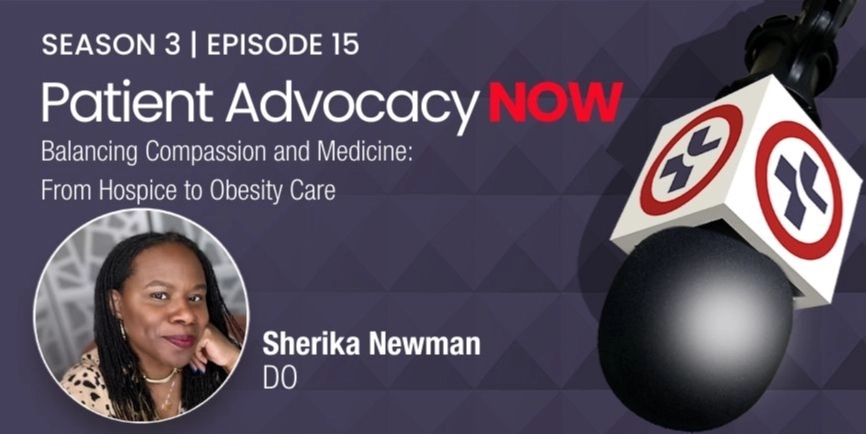
1 329 views