I have colleagues that I've gotten to know and will sometimes have them act as my back up. Since they typically are not going to be nearly as familiar with the case it can be challenging. I've never had to actually have a back up advocate step in, but I imagine if I did have to (likely, I'm sure, at some point) I would have to still be supporting by providing information and context to them as they work on whatever issue is at hand for the client. I work with complex care patients, and things can move fast (While still feeling like they are moving soooo sloowwwwww), so it would be hard to keep someone fully up to speed for a just incase.
Hi everyone! While a bit delayed, I wanted to take a moment to introduce myself—and to say welcome and thank you to everyone who has joined PA360° to be part of this community and these conversations.
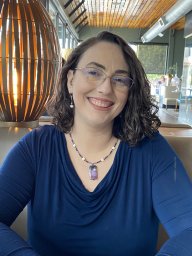
My name is Melina Oien. I am a BCPA and hold a master’s degree in Health Advocacy from Assumption University. I’m a staff member at GNA, one of your admins here, and an independent patient advocate. Like many at GNA, my role spans a wide range of work—from program development and design, to building and managing outreach and partnership relationships, to supporting our Patient Advocacy Liaisons with more complex or extraordinary cases within the Advocacy Support Center.
In my direct 1:1 work, I focus on medical guidance, with a tendency towards pediatric and young adult patients with complex care needs, particularly rare disease navigation and management (from an advocacy perspective, not as a provider). The individuals I support often have needs beyond direct medical care that still significantly impact their health, so my work frequently overlaps with disability advocacy—connecting people to DSHS and other community resources, and helping navigate, expedite, and appeal within those systems too.
It’s a wild ride sometimes, but I truly love what I do. I'm always happy to connect, and am looking forward to seeing the community grow!
This is so important to do sometimes. There are a lot of reasons why we forget to clear out the clutter periodically. I think that sometimes we fall subject to the fallacy that something we've invested a lot of time and energy in but isn't adding value to our lives will start doing so if we just keep at it a little bit longer, and a little bit longer. I also think that, in the U.S. at least, we tend to carry a deeply ingrained belief that quitting is inherently bad — and clearing out that clutter can at times feel like quitting. Letting go of something you’ve invested time, energy, or resources into can feel wasteful—as if the only acceptable option is to push through no matter what. We see this reinforced in messaging and marketing at times too, reinforcing the idea (Nike’s “Just Do It” being a classic example).
And yes—there are absolutely times when pushing ourselves matters, when stepping away wouldn’t serve us. But there are also times when not quitting, or not clearing out the clutter, is what causes harm.
That constant pressure to keep going can lead us to normalize chaos and clutter—both mental and physical—leaving little room for ourselves. I feel like this is especially true in roles like patient advocacy, where so many of us are deeply passionate and driven to support others, often at the expense of our own well-being.
What often gets overlooked is how much more we’re capable of when we allow ourselves space—mentally and physically. That the space isn’t something that always needs to be filled. In fact, protecting it can strengthen our ability to function, to process difficult emotions, and to feel more grounded and present in both our personal and professional lives.
Hi Blaire — this is a really thoughtful and thorough approach. You’re not missing anything major clinically from what I can see. What you’re running into is something we see more often than people realize: a structural gap in the system for patients exactly like her.
What’s happening here isn’t that these programs are viewing her as “too complex,” like Dad thinks, but rather that she falls into a very specific category that the current system doesn’t handle well—patients who are minimally conscious with emerging signs of awareness but not yet able to reliably participate. The programs that declined her are largely built around patients who can demonstrate consistent engagement in therapy. When a patient is earlier in recovery—like she is now—they often don’t meet those participation thresholds, even though this is exactly the period where the right environment can matter most.
That distinction may also help reframe things for her dad. The denials aren’t evidence that she’s “too complex” to leave the hospital—they’re evidence of a gap in available levels of care in the U.S., particularly for pediatric Disorders of Consciousness. There are simply very few programs designed to take patients before command following emerges, which leaves families feeling like there must be something “more” she needs medically, when in reality it’s a mismatch between patient stage and program design.
Because of that, the framing of the case becomes really important. Positioning her as “too complex for SNF” tends not to land, because that’s not the variable being evaluated. What does tend to resonate is describing her as an early-stage, minimally conscious pediatric patient with clear signs of emerging awareness (tracking, appropriate laughter), still within the critical neurorecovery window following severe TBI, who would benefit from a structured Disorders of Consciousness-focused environment to support that trajectory. That shifts the conversation from placement difficulty to preservation of recovery potential.
You’ve already done a strong job getting referrals out, and I agree with where you’ve landed. At this point, I would stay tightly focused on programs that are more tolerant of low-arousal or DoC-level patients:
* Children’s Specialized Hospital (NJ) — your strongest current lead, especially since they’re already leaning toward acceptance
* Good Shepherd Rehabilitation (PA) — one of the few programs that explicitly works with pediatric DoC / low-arousal patients
* CHOP (Philadelphia) — large pediatric system that has managed DoC patients even if not formally labeled as such
Also reasonable to consider if the above are not appropriate/available to her:
* Primary Children’s (Utah)
* Phoenix Children’s
* Internal re-evaluation at Children’s Colorado if there’s any pathway for escalation
Where I’ve seen cases turn is often not in the clinical details themselves, but in how consistently those details are presented. When documentation centers on “unable to follow commands,” it tends to push programs toward automatic denial. When the same patient is consistently described as minimally conscious with emerging, observable signs of awareness, early in the recovery window, and now medically stable with prior issues clearly resolved, it can shift how they interpret candidacy.
For Thursday, it may help to anchor the conversation in alignment rather than opposition—something along the lines of not disputing that she no longer meets acute criteria, but emphasizing the need to identify the most appropriate neurorehabilitative environment for a patient at this stage of recovery, rather than defaulting to a generic pathway. If discharge does move forward, the goal would be making sure it’s to a setting that can support brain injury recovery and that there is a clear plan for reassessment if/when her level of responsiveness evolves.
If she does end up needing to step down before a DoC-capable program accepts, framing that as a temporary bridge with a defined re-evaluation window (rather than an endpoint) can help keep momentum and expectations aligned with her recovery trajectory.
This is one of the hardest spaces in the system to navigate, not because of missed clinical issues, but because of how limited the pathways are for this specific stage of recovery. And when it’s a pediatric case, those gaps are even wider. I have a pediatric client currently going through a similar issue.
Hope this helps! You are welcome to reach out to me if you would like to connect and talk directly about your case.
I opened an LLC. Although I am not actively building out my client list, as most of my time is spent working for GNA, but I often have kept a small client list.
The best resources along the way have been fellow advocates, who generously have shared their «what worked for me, what didn't»s, encouraged me to keep going and not be intimidated by the business aspect of ..well, running a business, and who willingly have shared their professional expertise when a case felt too big, or perhaps had an aspect I wasn't as comfortable with as the rest of the case. It gave me lived experiences that showed me just how invaluable having a community of advocate colleagues can be.


I have colleagues that I've gotten to know and will sometimes have them act as my back up. Since they typically are not going to be nearly as familiar with the case it can be challenging. I've never had to actually have a back up advocate step in, but I imagine if I did have to (likely, I'm sure, at some point) I would have to still be supporting by providing information and context to them as they work on whatever issue is at hand for the client. I work with complex care patients, and things can move fast (While still feeling like they are moving soooo sloowwwwww), so it would be hard to keep someone fully up to speed for a just incase.
My name is Melina Oien. I am a BCPA and hold a master’s degree in Health Advocacy from Assumption University. I’m a staff member at GNA, one of your admins here, and an independent patient advocate. Like many at GNA, my role spans a wide range of work—from program development and design, to building and managing outreach and partnership relationships, to supporting our Patient Advocacy Liaisons with more complex or extraordinary cases within the Advocacy Support Center.
In my direct 1:1 work, I focus on medical guidance, with a tendency towards pediatric and young adult patients with complex care needs, particularly rare disease navigation and management (from an advocacy perspective, not as a provider). The individuals I support often have needs beyond direct medical care that still significantly impact their health, so my work frequently overlaps with disability advocacy—connecting people to DSHS and other community resources, and helping navigate, expedite, and appeal within those systems too.
It’s a wild ride sometimes, but I truly love what I do. I'm always happy to connect, and am looking forward to seeing the community grow!
And yes—there are absolutely times when pushing ourselves matters, when stepping away wouldn’t serve us. But there are also times when not quitting, or not clearing out the clutter, is what causes harm.
That constant pressure to keep going can lead us to normalize chaos and clutter—both mental and physical—leaving little room for ourselves. I feel like this is especially true in roles like patient advocacy, where so many of us are deeply passionate and driven to support others, often at the expense of our own well-being.
What often gets overlooked is how much more we’re capable of when we allow ourselves space—mentally and physically. That the space isn’t something that always needs to be filled. In fact, protecting it can strengthen our ability to function, to process difficult emotions, and to feel more grounded and present in both our personal and professional lives.
What’s happening here isn’t that these programs are viewing her as “too complex,” like Dad thinks, but rather that she falls into a very specific category that the current system doesn’t handle well—patients who are minimally conscious with emerging signs of awareness but not yet able to reliably participate. The programs that declined her are largely built around patients who can demonstrate consistent engagement in therapy. When a patient is earlier in recovery—like she is now—they often don’t meet those participation thresholds, even though this is exactly the period where the right environment can matter most.
That distinction may also help reframe things for her dad. The denials aren’t evidence that she’s “too complex” to leave the hospital—they’re evidence of a gap in available levels of care in the U.S., particularly for pediatric Disorders of Consciousness. There are simply very few programs designed to take patients before command following emerges, which leaves families feeling like there must be something “more” she needs medically, when in reality it’s a mismatch between patient stage and program design.
Because of that, the framing of the case becomes really important. Positioning her as “too complex for SNF” tends not to land, because that’s not the variable being evaluated. What does tend to resonate is describing her as an early-stage, minimally conscious pediatric patient with clear signs of emerging awareness (tracking, appropriate laughter), still within the critical neurorecovery window following severe TBI, who would benefit from a structured Disorders of Consciousness-focused environment to support that trajectory. That shifts the conversation from placement difficulty to preservation of recovery potential.
You’ve already done a strong job getting referrals out, and I agree with where you’ve landed. At this point, I would stay tightly focused on programs that are more tolerant of low-arousal or DoC-level patients:
* Children’s Specialized Hospital (NJ) — your strongest current lead, especially since they’re already leaning toward acceptance
* Good Shepherd Rehabilitation (PA) — one of the few programs that explicitly works with pediatric DoC / low-arousal patients
* CHOP (Philadelphia) — large pediatric system that has managed DoC patients even if not formally labeled as such
Also reasonable to consider if the above are not appropriate/available to her:
* Primary Children’s (Utah)
* Phoenix Children’s
* Internal re-evaluation at Children’s Colorado if there’s any pathway for escalation
Where I’ve seen cases turn is often not in the clinical details themselves, but in how consistently those details are presented. When documentation centers on “unable to follow commands,” it tends to push programs toward automatic denial. When the same patient is consistently described as minimally conscious with emerging, observable signs of awareness, early in the recovery window, and now medically stable with prior issues clearly resolved, it can shift how they interpret candidacy.
For Thursday, it may help to anchor the conversation in alignment rather than opposition—something along the lines of not disputing that she no longer meets acute criteria, but emphasizing the need to identify the most appropriate neurorehabilitative environment for a patient at this stage of recovery, rather than defaulting to a generic pathway. If discharge does move forward, the goal would be making sure it’s to a setting that can support brain injury recovery and that there is a clear plan for reassessment if/when her level of responsiveness evolves.
If she does end up needing to step down before a DoC-capable program accepts, framing that as a temporary bridge with a defined re-evaluation window (rather than an endpoint) can help keep momentum and expectations aligned with her recovery trajectory.
This is one of the hardest spaces in the system to navigate, not because of missed clinical issues, but because of how limited the pathways are for this specific stage of recovery. And when it’s a pediatric case, those gaps are even wider. I have a pediatric client currently going through a similar issue.
Hope this helps! You are welcome to reach out to me if you would like to connect and talk directly about your case.
I opened an LLC. Although I am not actively building out my client list, as most of my time is spent working for GNA, but I often have kept a small client list.
The best resources along the way have been fellow advocates, who generously have shared their «what worked for me, what didn't»s, encouraged me to keep going and not be intimidated by the business aspect of ..well, running a business, and who willingly have shared their professional expertise when a case felt too big, or perhaps had an aspect I wasn't as comfortable with as the rest of the case. It gave me lived experiences that showed me just how invaluable having a community of advocate colleagues can be.