


SEALED MEDICATIONS DONT ALWAYS NEED TO GO TO WASTE
SEALED MEDICATIONS DONT ALWAYS NEED TO GO TO WASTE
-----------------------------------------
How to Donate Sealed Medications — such as oral cromolyn
---------------------------------------
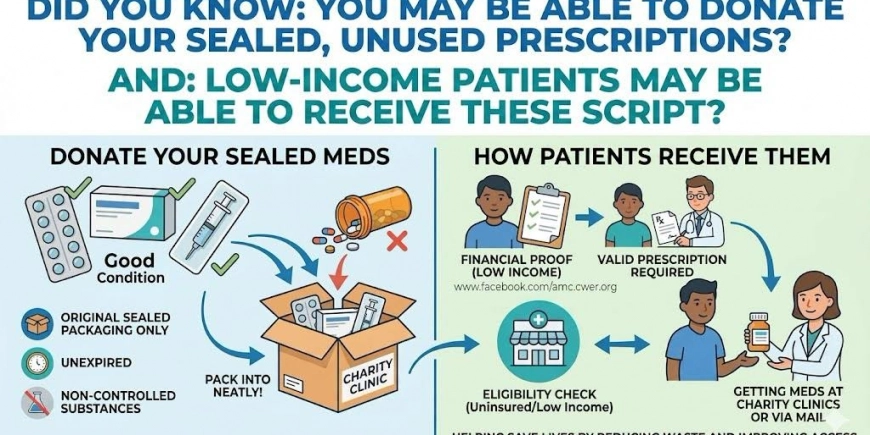
Many people do not realize that unexpired, sealed prescription medications often are able be donated to patients who cannot afford them. Through formal state donation programs, specific clinics and pharmacies may be able to legally accept these unused drugs and redistribute them safely. (Programs may vary by state, even city or county. Check your region.)
THE MORE WE DONATE THESE UNUSED MEDICATIONS, THE MORE THEY HELP OUR FELLOW PATIENTS AND THE LESS END UP IN LANDFILLS. WIN WIN!
To be eligible for donation, the medication must meet strict legal criteria:
1. It must be in its original, unopened, tamper-evident manufacturer packaging or completely intact blister packs (such as boxes of oral cromolyn ampules).
2. It must be a non-controlled substance (meaning no opioids, painkillers, ADHD stimulants, or specific anxiety medications).
3. It must be unexpired with a clearly visible expiration date.
4. It typically must not require refrigeration.
If your medicine meets these guidelines, you may be able to mail it to state-approved organizations like MediCircle or SIRUM (sirum. org), which provide free shipping labels, or drop it off at participating local community clinics and free pharmacies. Check google for facilities in your region.
----------------------------------
How Low-Income Patients MAY be Able to Receive These Medications
----------------------------------
Donated prescription medications may be distributed to patients who are uninsured, underinsured, or low-income through licensed charitable clinics, community health centers, and non-profit pharmacies.
THE MORE WE DONATE THESE MEDS, THE MORE ARE AVAILABLE TO OUR FELLOW PATIENTS, INSTEAD OF GOING INTO THE LANDFILLS.
To access these free medications, a patient must follow a structured framework:
1. Obtain a valid prescription from a licensed healthcare provider. Even though the medication is donated, a doctor's order is legally required to dispense it.
2. Connect with a participating local free clinic or an approved online charity pharmacy network.
3. Verify eligibility, which typically involves confirming your income level relative to the Federal Poverty Level or proving a lack of adequate prescription insurance coverage.
Once approved, the participating pharmacy or clinic will dispense the medication completely free of charge, though a very small, nominal processing fee (usually between 3 and 5 dollars) may apply to cover the physical packaging and labeling materials.

Sometimes patients casually mention that they have unused medications sitting in a drawer at home, but because it may not be directly connected to the case we are helping them with, it can be easy to miss or forget.
This is such a useful option to keep in mind and share when appropriate, especially if it helps patients safely dispose of medications they no longer need.