


Why Representation Matters in Amputee Support: Understanding Different Experiences After Amputation
One of the most powerful things we can offer someone after amputation is encouragement. Hearing that fear is normal, that healing takes time, and that things can improve with practice can make a tremendous difference for someone early in their journey.
I remember that fear myself.
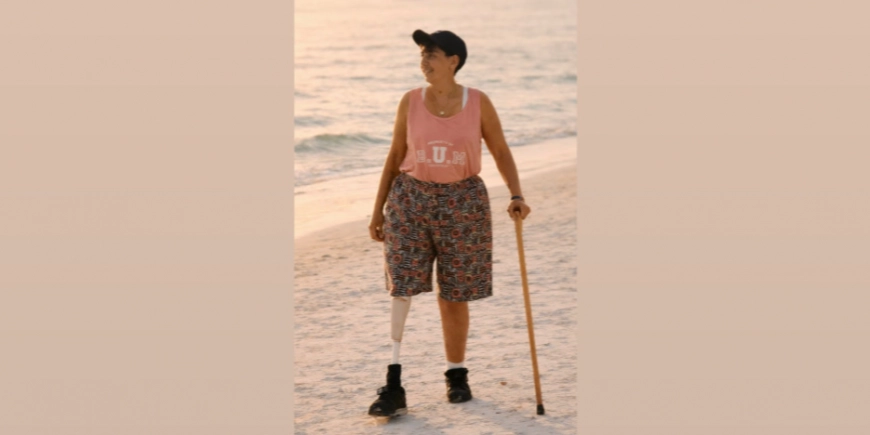
After my amputation more than thirty years ago, learning to trust my prosthesis did not happen overnight. There were moments of uncertainty, frustration, hesitation, and fear of falling. Like many above-knee amputees, I experienced falls and the loss of confidence that can come with them. The fear of falling can affect not only physical progress but mental health as well, creating hesitation, anxiety, and sometimes avoidance. I had to learn not only how to walk again, but how to trust a prosthetic knee, how to balance differently, and how to rebuild confidence in my own body. Progress came slowly, and it did not always look the way I expected it to. This process can also be ongoing when adjusting to a new socket or prosthetic components, or when dealing with injuries, changes in health, or age.
Over time, both through lived experience and through years working with amputees professionally, I came to understand something important. Not all amputee experiences are the same, and comparing progress can sometimes do more harm than good.
Above-knee amputees often face different physical and emotional challenges. Learning to trust a prosthetic knee, managing balance, and adapting to increased energy demands can take longer and may require different stages of progress. What may appear simple for one person can feel overwhelming for another, especially when comparisons begin to happen.
This is where representation becomes important for mental health.
When amputees see examples that reflect their own level of amputation and stage of recovery, they are more likely to feel understood and encouraged. When the examples feel very different from their own experience, even well-intended encouragement can unintentionally lead to frustration or self-doubt. Many above-knee amputees quietly wonder why their progress does not look the same, without realizing how many factors influence recovery.
It’s a process.
We are all different. Progress depends on many things, including a healed residual limb, a well-fitting socket, proper suspension and alignment, appropriate footwear, the use of assistive devices when needed, and other health conditions that may affect strength, balance, or endurance. Emotional readiness and confidence also play a significant role, particularly for above-knee amputees learning to trust their prosthetic knee.
This perspective comes from more than thirty years of personal experience as an amputee and from decades spent working alongside others in orthotics and prosthetics, and now as an amputee coach. I have seen how important it is for people to feel seen where they are, not where others expect them to be.
Support communities are strongest when they make space for these differences. Encouragement remains essential, but so does acknowledging that every amputee’s journey unfolds at its own pace.
For this reason, I have helped develop spaces that allow for both shared experience and level-specific support. Amputees Preparing Amputees 4 Life (APA4L) provides support for people at all levels of amputation, while APA4L: Single-leg above-knee amputees group allow individuals to connect with others facing similar challenges. Both approaches matter. Together, they help reduce isolation and support long-term emotional wellness.
After amputation, progress is rarely linear. There are advances, setbacks, and adjustments along the way. What matters most is not comparing one journey to another, but recognizing that healing and confidence grow differently for everyone.
When amputees feel understood, supported, and represented, hope becomes easier to hold onto.
 Sofie Schwartz
7 months ago
Sofie Schwartz
7 months ago
 Val Barschaw
7 months ago
Val Barschaw
7 months ago