


Fatphobia
Today I wanted to write about something that, unfortunately, many people still avoid talking about: fatphobia and weight bias in healthcare.
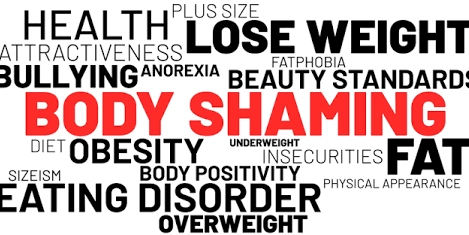
Every day, I read posts about discrimination against different people and communities. But one form of discrimination that is still minimized, joked about, and sometimes openly accepted is the discrimination many people experience because of their weight.
For many patients, weight is not simply a matter of “willpower” or appearance. It can be connected to complex medical, metabolic, emotional, social, and systemic factors. Yet overweight patients are often bullied, dismissed, degraded, blamed, and minimized — even when they are seeking medical care.
And now, the new joke is to call someone “Ozempic-skinny” when they reach a weight goal. But let me ask this: would we call a diabetic patient who is controlled with metformin a “metformin addict”? Would we call a heart patient taking Lipitor a “Lipitor freak” because they are trying to avoid another heart attack?
Why does every goal reached by an overweight person need to be ridiculed, minimized, or scrutinized?
I have a story. A very personal and heartbreaking story.
One of my aunts died of cancer while she was overweight. She weighed around 300 pounds. I will never forget the last day I visited her in the hospital. They wanted to discharge her immediately, even though her nasogastric tube was returning blood. There was no dignity in the way she was treated.
It was painful to see the faces of disgust from some of the nurses when they had to bathe her while she was dying in that bed.
At one point, I asked why her pad had not been changed because it appeared to have urine. Without empathy, and without really explaining anything with compassion, the nurse pressed my aunt’s thigh and a yellow liquid spilled out.
“That’s not urine. That’s bilirubin because of the cancer.”
And then she left.
No one came back to change the pad.
That moment stayed with me forever. It felt as if her weight made her less worthy of dignity. As if the larger patient dying in the bed was easier to ignore.
A year ago, I decided to have bariatric surgery. Not because I wanted to be a model. Not because I wanted to fit someone else’s standard of beauty. I did it because I wanted health, mobility, and a little more dignity in my life.
Do you know what I told my daughter at the airport when I was traveling for the procedure?
“Don’t worry, Princess. Now you’ll see that I’ll fit in the seat next to you at the concert you want to attend.”
Is that funny? Is that something people should joke about?
Patients come in all ages, sizes, backgrounds, and conditions. But every patient deserves respect. Every patient deserves dignity. Every patient deserves to be seen as a whole human being.
Today, I am raising my voice for overweight patients. Tomorrow, I will continue raising my voice for many more.
Because patient advocacy is more than a career. It is more than billable hours, reviews, titles, or certifications.
Patient advocacy is an art.
It is the art of giving visibility to the people the system prefers to ignore.
It is the art of giving a voice to the people the system tries to silence.
It is the art of seeing beyond what the system projects.
It is the art of changing lives and standing beside people when they feel unseen, unheard, or dismissed.
Only those who truly receive and follow this calling understand how much we sacrifice — and how deeply rewarding it is when we are able to make even one person feel seen, respected, and protected.
Blessings to all, my fellow advocates. Blessings to all.
First, i'm so incredibly sorry for what your family went through. NO ONE should ever be treatd that way, for any reason whatsoever.
Second, YES! THANK YOU for saying what is so often unsaid — that weight is about so much more than willpower.
My youngest was a competitive bicyclist. She regularly went, literally 100 miles in a day on her bike. When we were seeing docs about her post-exertional malaise and her orthostatic intolerance, EVERYONE tried to blame her weight. When i explained how fit the girl was, then they would blame overtraining and yet also somehow come back to it being due to her weight. Drove me CRAZY and drove her away from medical care for a long time.
THANK YOu for saying what needs to be said.