

All Channels
The "all channels" view lets you see all content from the entire site, not filtered to just those channels or authors you followed.

Clearing Out What No Longer Fits
Sometimes growth does not begin with adding more.Sometimes it begins with clearing space. Spring has a way of showing us what has been sitting... See More

1 197 views
2 comments
 Melina Oien
7 months ago
This is so important to do sometimes. There are a lot of reasons why we forget to clear out the clutter periodically. I think that sometimes we fall subject to the fallacy that something we've invested a lot of time and energy in but isn't adding value to our lives will start doing so if we just keep at it a little bit longer, and a little bit longer. I also think that, in the U.S. at least, we tend to carry a deeply ingrained belief that quitting is inherently bad — and clearing out that clutter can at times feel like quitting. Letting go of something you’ve invested time, energy, or resources into can feel wasteful—as if the only acceptable option is to push through no matter what. We see this reinforced in messaging and marketing at times too, reinforcing the idea (Nike’s “Just Do It” being a classic example).
And yes—there are absolutely times when pushing ourselves matters, when stepping away wouldn’t serve us. But there are also times when not quitting, or not clearing out the clutter, is what causes harm.
That constant pressure to keep going can lead us to normalize chaos and clutter—both mental and physical—leaving little room for ourselves. I feel like this is especially true in roles like patient advocacy, where so many of us are deeply passionate and driven to support others, often at the expense of our own well-being.
What often gets overlooked is how much more we’re capable of when we allow ourselves space—mentally and physically. That the space isn’t something that always needs to be filled. In fact, protecting it can strengthen our ability to function, to process difficult emotions, and to feel more grounded and present in both our personal and professional lives.
 Teri Frykenberg
7 months ago
Good advice for clients, patients and advocates alike!

Recommended strategies for addressing delays in care caused by chronic understaffing
Requesting advocates share their best strategies for addressing delays in care caused by chronic understaffing. We have all experienced... See More
1 437 views
Renea Stasaski
7 months ago
David, this is exactly the systemic issue Cheryl is pointing to — and there's an underutilized resource worth knowing about.
The Older Americans Act established the National Long-Term Care Ombudsman Program, staffed by both paid and volunteer advocates. Critically, they work for residents, not facilities. They can address individual resident concerns and pursue systemic facility issues. Complaints feed into state and national trend databases that can drive regulatory action.
As a former Texas ombudsman, I can tell you SNFs were prioritized in caseloads over assisted living, even though both are covered under the OAA. The program is lean, but strategic.
As a first step I recommend looking for the ombudsman contact information typically posted at the facility entrance. Introducing yourself creates a ready partnership for exactly the issues you're describing.
Understaffing explains resource constraints. It doesn't excuse poor care.
Renea Stasaski, BCPA
Sonoran Wayfinders
Advocate's AI Atlas
 AnnMarie Cross
7 months ago
Thank you for asking such an important, complex question!
Cheryl Kauffman
7 months ago
Oh gosh, this is such a major problem! And if I knew how to fix it, I would be a wealthy woman! I experience this both as a clinician and as an advocate. A few strategies that are absolutely not fixes:
1. bundle needs as much as possible so there are fewer calls on the call light. I know it's not always possible! If possible, build ADL routines so they're more anticipated/scheduled and more efficient.
2. let the staff know they're appreciated, with words and maybe snacks. Let managers know who is excellent.
3. escalate as needed if/when there are safety concerns
4. aim for non-profit care centers whenever possible
Well, that's a few thoughts to start the conversation.
Cheryl Kauffman, PT, BCPA
Seattle Patient Advocates
Am I covering all of the bases?
Fellow advocates - I am writing this post to ensure that I've covered everything that I should with a newly acquired client. Background: 16... See More
1 541 views
Blaire Flamand
7 months ago
Thank all of you, so much, for your input. It means the world to me how thoughtful you have all been in trying to contribute positively to this situation.
You all are echoing something I knew from the start: it's all about how she's framed. It was my goal from the start to figure out what angle I can take...how to change how the healthcare system is seeing her. Perspective rules everything, doesn't it? And as an advocate, and a nurse, my goal is always collaboration first...I don't want to go into this meeting opposing things. That won't get my client what she needs.
You all have given me several excellent pieces of information and things to be thinking about. Though I have so much experience, I will constantly be learning and leaning into this amazing community.
Depending on how this meeting goes tomorrow, I may call on those of you who have offered to assist. As a type A personality with a fiery passion for this, I absolutely need to make sure I've done everything I could. My conscious won't allow anything less.
AnnMarie — please do share via the private facebook. All thoughtful comments/advice is welcome.
Again, thank you.
Kathleen Skeins
7 months ago
Hi Blaire,
I spoke in depth with the girl's aunt when they were searching for an advocate. I am so sad you are still running into denials. So many wrong steps have been taken when this family is willing to do anything for her. What is wrong with people!?!?
I spoke with some contacts who were willing to help as best they could. I am happy to pass them on to you.
I am not nearly as capable as you with this case, but I am here to lend a familiar ear. I am also available if the family needs anything I can help with for caregiver support.
 Joseph Frankel
7 months ago
Thank you for sharing this case and for using PA360º as a thoughtful sounding board. Your approach reflects both humility and resourcefulness. Creating space for peers to weigh in not only opens the door to new perspective, but can be grounding and clarifying in complex situations like this. Even advocates benefit from the insight of other advocates. I appreciate your openness and commitment to getting this right, Blaire.
Medicare enrollment
Has anyone successfully completed Medicare enrollment as an independent RN providing patient advocacy/care coordination. If so did you need a... See More
1 486 views
AnnMarie Cross
7 months ago
Hi, Rachel!
Do you mean you are trying to become an advocate who accepts Medicare?
if so, there are a number of agencies around the country that accept Medicare. It is my understanding that an RN must work under a licensed supervising clinician, and the setup is long, indepth and complex. I know of one RN advocate who is deep into the process and actually building a training program she intends to offer once she has reached sort of 'a good endpoint' with the process.
I hope other nurses might respond here to provide more information, although if this question is about accepting Medicare as reimbursement, it's likely in the wrong conversation space, and I can move it for you.
If you would like the list of agencies that we at GNA are aware of and have had at least some contact with/knowledge of, feel free to ask. I'll gladly share it here.
Introduction
Hi all! I introduced myself in the 'All Channels' area and it was suggested that I also post here with all my experience with advocating for people... See More
1 442 views
AnnMarie Cross
7 months ago
Thanks for sharing, karen! Id love to see you start a conversation about long term care claims, knowing that's a niche you know well.
Question for Fellow Independent Advocates: How Long Do You Maintain Client Files?
Hi colleagues, I’m reaching out to gather insight on best practices for maintaining and discarding client files within independent advocacy... See More
1 469 views

New Podcast Episode: The Reality of Medicare's 2026 Drug Price Negotiations
This year, Medicare's newly negotiated prices for 10 common, high-cost drugs (including Eliquis, Xarelto, and Jardiance) have officially... See More

1 450 views
End of Life document review
Does anyone offer a standalone service/package to discuss, review, draft POLST, values statement, educate about living will, etc? I have had... See More
1 613 views
Peter Abraham
1 month ago
I do this for a living — compassioncrossing.info/advance-care-planning/
I set it up as a package service where I charge a flat fee that includes unlimited meetings over 12 months, based on our mutual schedules. Most clients complete everything in less than 3 months, in 2 to 5 meetings.
I set it up as a package service where I charge a flat fee that includes unlimited meetings over 12 months, based on our mutual schedules. Most clients complete everything in less than 3 months, in 2 to 5 meetings.
 Maggie English
7 months ago
Thank you all for responding!
Teri Frykenberg
7 months ago
I do a 90 minute virtual review with clients or entire families for 400.00 that includes referrals and assessment of acute needs. If they want me to review documents and develop a medical profile and care plan with resources it is 1500. If they need in person advocacy services and the above, I charge 2500 for initial ten hrs of work then 250/hr for additional hrs. Most of my clients choose the third option as I tend to get very medically complex cases.

So Many Types of Patient Advocates, So Little Understanding of Why We All Matter
Hello, Colleagues, Spring is upon us, a time for new beginnings and growth. Patient advocacy is certainly growing (especially since I ventured into... See More

1 515 views
 Avrom Fox
7 months ago
Lisa, I fully agree with your perspective and appreciate you raising this important issue. As one of the “old-timers” in patient advocacy for over 12 years, I continue to work on a limited, highly selective basis, guided by an approach that prioritizes time, trust, and personal connection.
My core philosophy remains unchanged: to be a true champion for patients and their families as they navigate an increasingly complex healthcare system. Many who need advocacy simply cannot access it due to cost. For me, the greatest reward has always been human, not financial, and I do everything I can to work with Medicare clients and expand access for those who might otherwise go without support.
I also believe our services should not be excessive. I can not relate to fees of even 200.00 or more. At the same time, I respect advocates for whom this is their primary profession—they must charge fair, realistic, and justifiable rates.
I am encouraged that Umbra is helping create pathways for Medicare reimbursement. While modest, it represents an important step forward—one we should all support.
 Jeff Byars
7 months ago
I agree Lisa, it's getting uglier indeed.
I had to Etch-a-Sketch my business model almost immediatly when I opened my independent advocacy practice. My LLC was formed in February 2020 and the world closed down in March due to Covid. But the changes I made allowed me to serve clients all over the USA remotely. Over the years my business has evolved. The unforseen changes I had to implement early, have benefited throughout the years. Being able to adapt to client's needs is something I continue with to this day.
I had to Etch-a-Sketch my business model almost immediatly when I opened my independent advocacy practice. My LLC was formed in February 2020 and the world closed down in March due to Covid. But the changes I made allowed me to serve clients all over the USA remotely. Over the years my business has evolved. The unforseen changes I had to implement early, have benefited throughout the years. Being able to adapt to client's needs is something I continue with to this day.
Leona Wells
7 months ago
Hi Lisa! Such a great post — thank you for sparking this conversation. When I built the documents and workflow for my practice, I found myself asking the same questions: Who is my patient population? What can I help with? Who are my partners?
The more I explored advocacy, the more I realized how broad our work truly is. We can support almost anyone, in so many different situations, and I worried that defining my services too narrowly might limit how clients see their own needs.
That’s why I offer a short, free consultation. It gives me space to ask questions clients may not think to ask, listen to their concerns, and highlight support they may not realize an advocate can provide. That brief conversation often brings clarity for both of us.
What Is Ready to Bloom?
There is something so hopeful about this time of year. The ground is still a little messy. The air is still unpredictable. Some days feel soft and... See More

1 275 views

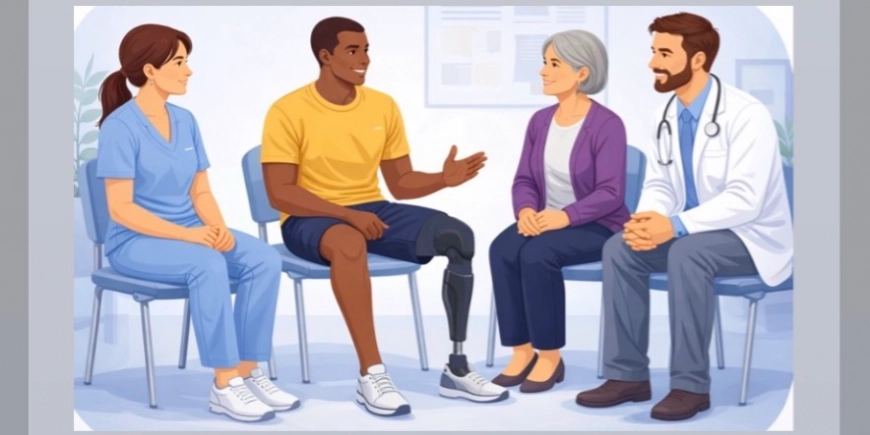
What Amputees Should Expect From an Advocate
Advocacy can play an important role in life after amputation. Some amputees hire an advocate. Others may have one provided through insurance or a... See More
1 601 views
Kimberlie Williams-Feth, BSW
5 months ago
Lynn, Glad to know you're here. CPOs are so important! I see a lot of ortho, SCI, neuro, and TBI — so I imagine we may have some crossover. I'll be keeping you in mind for a complex CPO case.
Calming the Chaos: A More Supportive Path Forward
In stressful seasons of life, people are often asked to keep functioning even when they feel overwhelmed, uncertain, and emotionally exhausted... See More

1 326 views


Elder Attorney's
I recently started my own practice as a private patient advocate. After research i learned that Elder Attorneys are the main source for referrals... See More
1 543 views
Val Barschaw
8 months ago
The first thing you would need to be able to answer is why that would benefit the law firm? If you can see a clear path how your service helps them — then you have a potential opportunity.
If you have a know someone who works at a law firm you want to approach, take them to coffee or lunch and ask what the firm needs most? Listen to what pain points they have that you can help fix and begin there.
Having worked in law firms, I tried to imagine what would happen if someone come into the office seeking referrals. The only thing I could envision is if you have a professional brochure of your services (you know the kind you can put in a little display) that you may be able to set that in a waiting room area where one of their clients may pick it up and reach out to you. But only after you have shown the firm — it will help the firm.
Many lawyers are hesitant to make referrals...period. (But they love receiving them.)
Not meaning to sound negative, but until you can show them how you can help them, there is little reason to have a relationship.
A good relationship will lead to good referrals. Best wishes.
AnnMarie Cross
8 months ago
Andrew, this is a GREAT question! I'm hoping our members will jump in and share some insights.
Seeing Healthcare From Both Sides
After decades of working inside healthcare systems in both clinical and leadership roles, it wasn’t until I had to navigate the system for a... See More
1 445 views
 Anne Llewellyn
7 months ago
As a critical care nurse and a catastrophic care nurse case manager, I thought I knew the healthcare system, but then I became a patient and saw it from a completely different perspective.
After surviving brain cancer, I pivoted my practice to patient advocacy to help people (patients and caregivers) find the information and tools they could use to be their own best advocate. Like you, I found it eye-opening to be on the other side.
Anne
After surviving brain cancer, I pivoted my practice to patient advocacy to help people (patients and caregivers) find the information and tools they could use to be their own best advocate. Like you, I found it eye-opening to be on the other side.
Anne
AnnMarie Cross
8 months ago
What a GREAT question, CarolAnn! I hope others will read the full question and lean into the conversation!
I'd also be super curious how many advocates were PATIENTS FIRST, then healthcare workers, now professional advocates.
I'd also be super curious how many advocates were PATIENTS FIRST, then healthcare workers, now professional advocates.
When a Critical Care Registered Nurse (CCRN), Certified Flight Registered Nurse Credential Matter
There are specific moments in a client’s journey when consulting an RN with a background in critical care and flight nursing can make a... See More

1 423 views
Jeff Byars
8 months ago
Even another connection we have, patient transport. The next time we make a trip to Lexington, I am definitely going to have to make a side trip to meet in person for advocacy discussions over a cup of coffee.